
Construction projects succeed or fail based on timing. When deadlines slip, costs rise, and teams scramble to catch up. That’s where construction scheduling software comes in.
It helps project managers plan, assign, and track every task in real time, ensuring teams, materials, and equipment stay perfectly aligned.
In this section, we’ll break down what construction scheduling software really does, how it’s used on-site and in the office, and why it’s become a must-have for modern construction teams.
What Is Construction Scheduling Software and Why It’s Essential for Modern Projects
If you’ve ever tried juggling multiple construction projects, crews, and deadlines using spreadsheets or whiteboards, you already know how messy things can get.
Tasks overlap, updates get missed, and someone’s always asking, “Wait, which site are we supposed to be at today?”
That kind of chaos was once considered normal in construction management. But modern construction scheduling software has changed that.
It brings order, automation, and accountability to the planning and execution of projects. The right scheduling tool keeps everything and everyone on track, no matter whether you’re managing a small remodeling team or a large-scale infrastructure project.
Let’s break down how it works, why traditional scheduling often fails, and how today’s software is helping construction teams build smarter, faster, and with fewer headaches.
Key Takeaways
- Understand what construction scheduling software is and how it works.
- Discover how it enhances coordination and prevents costly project delays.
- Explore its core benefits for construction companies of all sizes.
- Discover how the right software connects teams, boosts productivity, and safeguards profits.
Why Traditional Scheduling Fails Modern Construction Teams
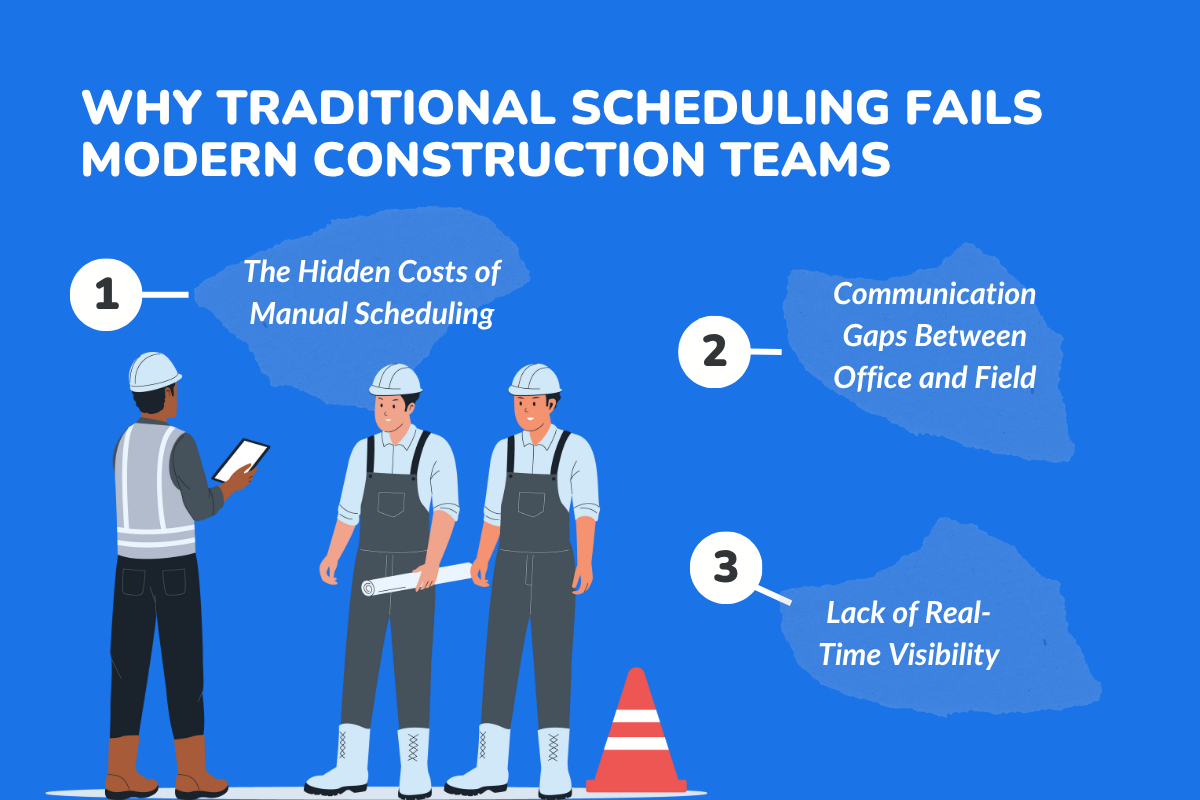
Construction teams today can’t afford to rely on outdated scheduling methods. Manual tools and spreadsheets might look simple, but they cause costly delays, confusion, and inefficiencies.
Let’s explore why traditional scheduling often fails and how modern tools help keep projects on track:
1. The Hidden Costs of Manual Scheduling
For years, contractors relied on paper planners or Excel sheets to manage project timelines. At first, it seems manageable. However, once multiple projects start running simultaneously, things become complicated quickly.
Missed deadlines, double-booked crews, and idle equipment are common symptoms of outdated scheduling methods.
Each small scheduling mistake ripples through the entire operation, delaying materials, increasing labor costs, and frustrating clients.
Manual tools also lack real-time project tracking. This means when one person updates a spreadsheet, everyone else is already a step behind. That lack of synchronization eats into profits.
2. Communication Gaps Between Office and Field
A typical day in a construction business often involves dozens of calls and messages: “Where’s the crew?” “Is the concrete truck coming today?” “Who’s handling inspection?”
When updates happen over WhatsApp or phone calls, it’s easy for important details to get lost. Field teams might show up at the wrong site, or a subcontractor might miss an updated deadline.
These minor miscommunications lead to significant inefficiencies. However, with construction scheduling software, everyone, from project managers to field crews, works from the same schedule in real-time. There’s no confusion, no missed updates, and no downtime.
3. Lack of Real-Time Visibility
Without live updates, project managers are left guessing about progress. A delay in one task often affects several others, and without visibility, you can’t see the domino effect until it’s too late.
This reactive approach keeps teams in firefighting mode, rather than proactively managing potential issues. In 2025, contractors can’t afford that.
The new standard is digital clarity, where real-time data helps predict and prevent problems before they impact the schedule.
What Is Construction Scheduling Software?
Construction projects move fast, and managing them with spreadsheets or generic tools often leads to chaos. This is where construction scheduling software helps you.
It’s built to simplify planning, keep crews aligned, and ensure every project runs smoothly from start to finish.
1. Centralized Control for All Project Timelines
At its core, construction scheduling software is a centralized digital tool that creates, tracks, and manages every aspect of a construction project’s schedule.
From project start to completion, it helps project managers monitor timelines, allocate resources, and keep everyone accountable.
Take it as the command center of your operation. You can see every job site, every task, and every crew’s progress all from one dashboard.
2. The Core Purpose: Reducing Downtime and Maximizing Productivity
Construction scheduling tools automate repetitive tasks, send instant updates, and enable all stakeholders to view accurate project timelines in real-time.
Instead of manually adjusting charts or calling crews, the software updates everything automatically when a task changes.
This results in fewer bottlenecks, faster coordination, and increased productivity. The ultimate goal is simple: to keep work moving without unnecessary downtime.
3. Why It’s Built for Construction (Not Generic Scheduling Tools)
While general project management software, such as Microsoft Project or Asana, can handle basic scheduling, they often lack construction-specific features. The best construction scheduling software includes:
- Crew and equipment scheduling
- Task dependencies and sequencing
- Job site reporting
- Resource allocation and tracking
- Weather and inspection updates
These tools are designed specifically for the complex scheduling needs of the construction industry, enabling project managers to handle everything from subcontractor coordination to on-site change orders.
If you're puzzled about which software to choose for your construction business, then take a look at this: Top Construction Software Features That Save Time & Money
What Are the Core Features of Construction Scheduling Software That Power Smarter Scheduling
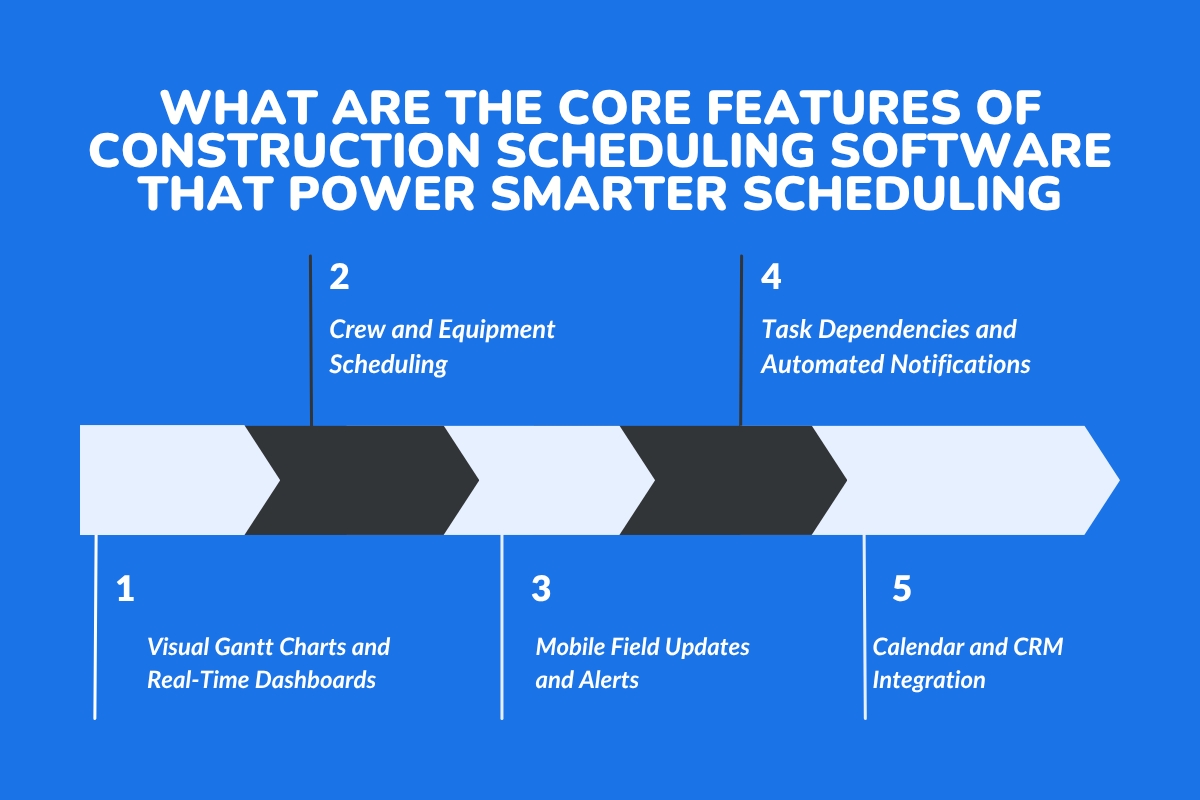
Modern construction scheduling software is packed with innovative, time-saving tools designed to keep projects moving smoothly.
These features work together to simplify planning, improve coordination, and boost overall project efficiency.
1. Visual Gantt Charts and Real-Time Dashboards
Gantt charts are the backbone of project scheduling. In construction scheduling software, these charts are interactive and visual. You can drag and drop tasks, adjust timelines, and instantly see how one change affects the rest of the project.
Real-time dashboards provide an at-a-glance view of project progress, so managers can quickly identify what’s on track and what’s falling behind.
2. Crew and Equipment Scheduling
Matching the right crew and equipment to the right job is essential. Construction scheduling software automates this process, ensuring there’s no overlap or idle time.
With automated resource management, you can:
- Assign tasks based on skill and availability
- Track equipment usage and maintenance
- Prevent double-booking or underutilization
This leads to higher productivity and better resource allocation across multiple projects.
3. Mobile Field Updates and Alerts
Construction doesn’t happen in the office; it happens in the field. That’s why mobile accessibility is crucial. Modern scheduling tools come with mobile apps that allow field teams to:
- View daily schedules and tasks
- Mark progress or completion
- Upload photos or notes directly from the job site
Managers receive instant updates, ensuring the office and field teams always stay on the same page.
4. Task Dependencies and Automated Notifications
In construction, even a single delay can disrupt the entire timeline. Task dependency features help link activities so that when one task changes, the rest of the schedule adjusts automatically.
Automated notifications keep teams informed about what’s next, preventing idle time and miscommunication.
5. Calendar and CRM Integration
Construction scheduling software integrates with tools like Outlook, Google Calendar, and your CRM. This ensures that project updates, client communications, and meeting reminders stay in sync.
The result is seamless integration across your entire tech stack, eliminating the need to jump between multiple platforms.
How Construction Scheduling Software Transforms Daily Operations
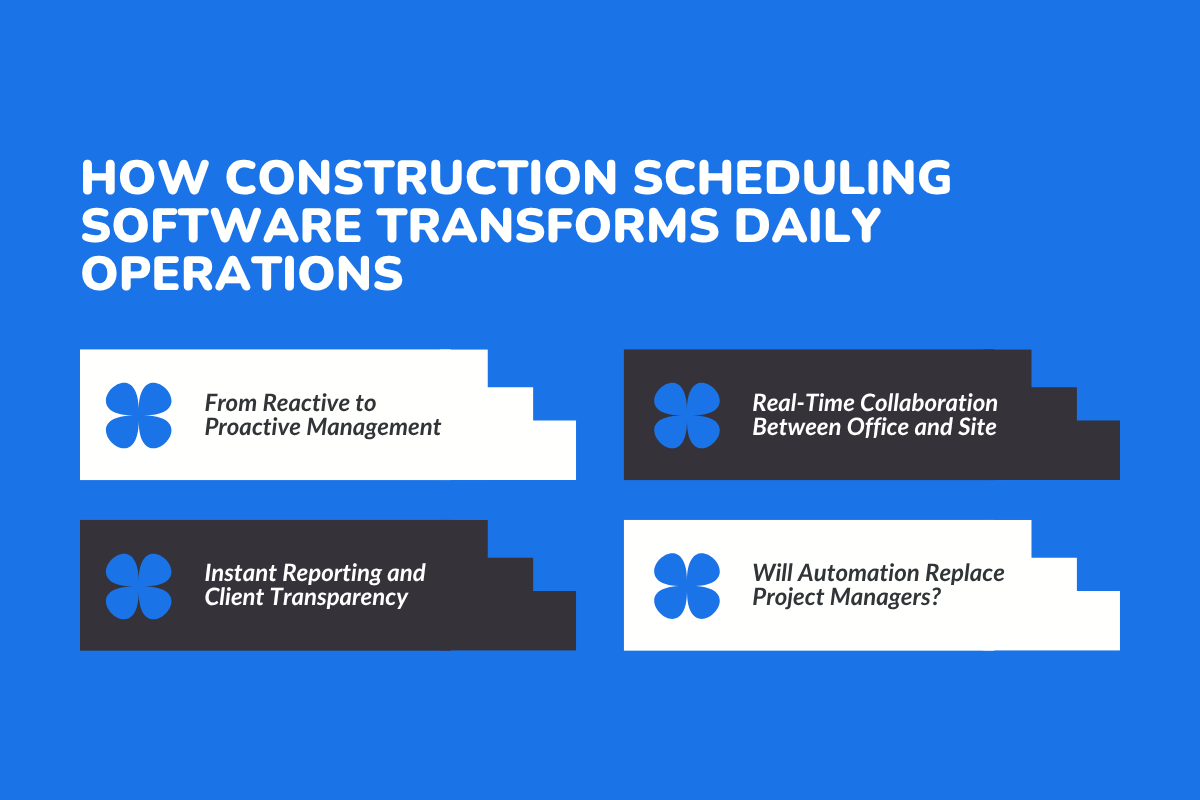
Construction scheduling software doesn’t just organize timelines; it transforms how teams operate day to day.
By automating updates, improving communication, and providing real-time visibility, it turns chaotic project management into a smooth, proactive, and highly efficient process.
1. From Reactive to Proactive Management
Traditional project management often involves reacting to problems after they occur. With construction project management software, you can spot issues before they escalate.
For example, if weather delays one task, the software automatically adjusts dependent activities and notifies affected teams. This proactive approach keeps projects running smoothly.
2. Real-Time Collaboration Between Office and Site
When everyone has access to the same live schedule, communication becomes effortless. Project managers, site supervisors, subcontractors, and clients can all view progress in real-time.
This transparency enhances coordination, reduces confusion, and helps prevent costly rework.
3. Instant Reporting and Client Transparency
Generating progress reports used to take hours. Now, with a few clicks, construction managers can create detailed reports, export timelines, and share visual dashboards with clients.
This level of visibility fosters trust, as it clearly shows clients exactly where their project stands and when they can expect completion.
4. Reduces Manual Workloads for Project Managers
There's a common myth that automation replaces project managers. In fact, automation enhances what project managers do best: making informed decisions and providing effective leadership.
Software handles the routine updates and repetitive coordination, freeing project managers to focus on strategy, client relations, and project performance. Think of it as working smarter, not replacing humans.
If you are wondering what good construction software can do for your business, then go through this: How Construction Project Management Software Improves Subcontractor Collaboration.
Integrating Scheduling Software with Construction Operations
Integrating scheduling software into your construction operations unifies individual tools into a single system.
When schedules, budgets, field updates, and client data all work together, projects run smoothly, decisions get faster, and profitability becomes far more predictable.
1. Linking Scheduling to Job Costing and Budgeting
Scheduling doesn’t happen in isolation. The best construction management software integrates scheduling with job costing, enabling managers to track how time and resources impact project budgets.
By linking cost and schedule data, you can spot budget risks early and make adjustments before overruns occur.
2. Syncing Field Apps and Communication Tools
Integrating scheduling software with field apps ensures information flows both ways. Updates made in the field are reflected in the main schedule instantly, and changes made by managers are implemented at the site immediately.
This eliminates confusion and keeps everyone from the estimator to the equipment operator on the same page.
3. CRM and Sales Alignment
When your scheduling software integrates with CRM systems, it connects sales promises to project delivery.
This ensures project start dates, client expectations, and contract milestones align perfectly with actual execution, a must-have for growing construction firms.
How ConstructionBase Can Simplify Scheduling for Growing Teams
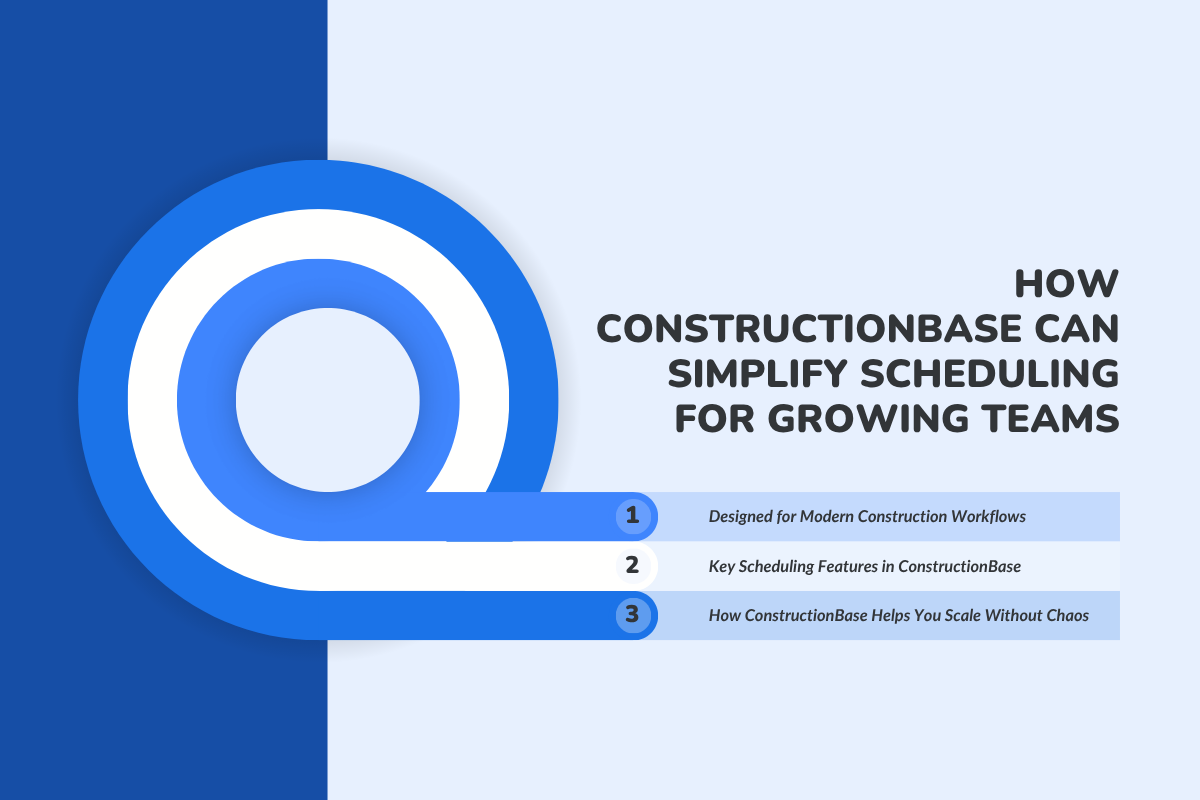
ConstructionBase alleviates the stress of managing multiple projects by transforming complex schedules into straightforward, automated workflows.
It’s built for growing construction teams that want to stay organized, save time, and scale operations without the usual chaos.
1. Designed for Modern Construction Workflows
ConstructionBase combines scheduling, communication, and cost tracking into a single, easy-to-use platform. It’s designed for modern construction workflows, helping teams manage complex construction projects without chaos.
2. Key Scheduling Features in ConstructionBase
- Automated crew and equipment scheduling
- Drag-and-drop project timeline management
- Mobile updates for field teams
- Real-time budget tracking
- Integrated dashboards and alerts
These construction-specific features make ConstructionBase one of the best construction scheduling software options for teams that want efficiency and control without a steep learning curve.
3. How ConstructionBase Helps You Scale Without Chaos
With ConstructionBase, scaling doesn’t mean more confusion. The platform scales with your business, enabling project managers to manage multiple projects, track progress, and allocate resources efficiently.
You spend less time chasing updates and more time managing projects that drive profitable growth.
Future Trends in Construction Scheduling Software
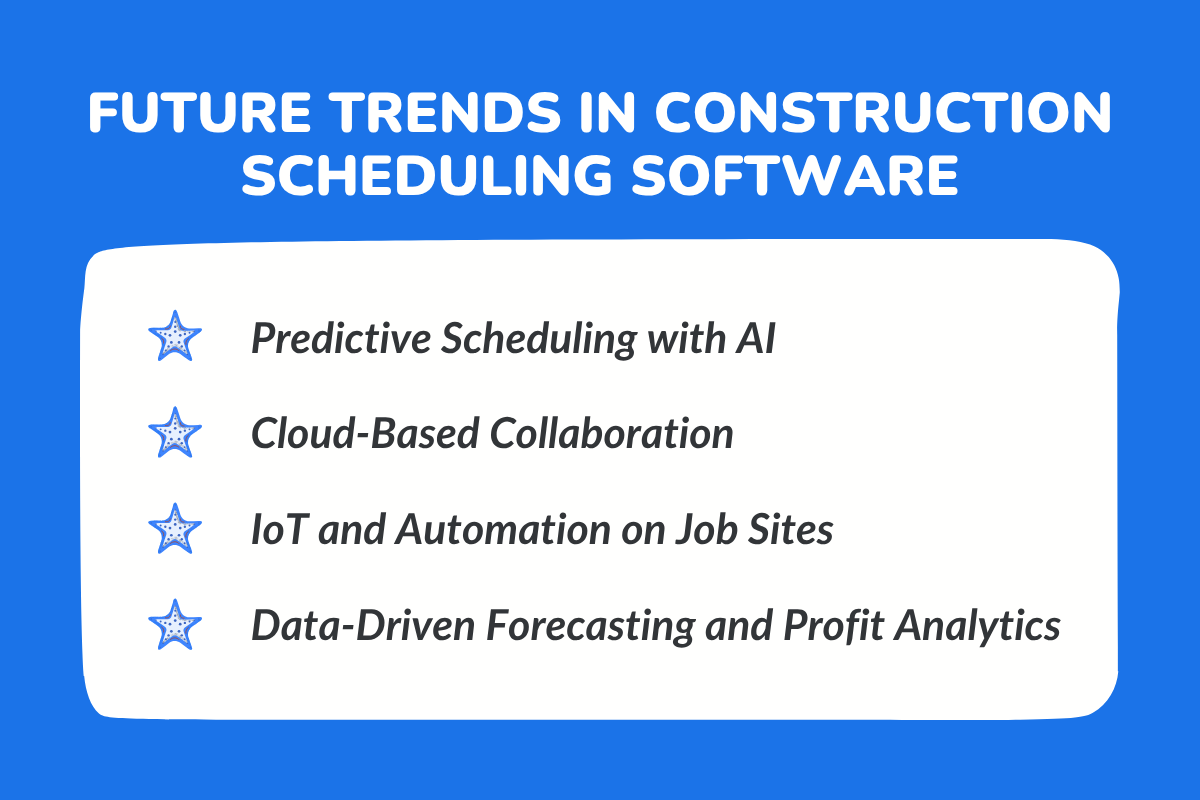
The future of construction scheduling is brighter, faster, and more connected. With AI, cloud collaboration, and real-time data shaping every project decision, tomorrow’s scheduling software will empower construction teams to plan with precision and build with confidence.
1. Predictive Scheduling with AI
Emerging scheduling tools utilize predictive analytics to forecast delays and automatically adjust timelines based on real-time conditions, such as weather, material delivery, or labor shortages.
These innovations will help project managers stay one step ahead, even on large-scale construction projects.
2. Cloud-Based Collaboration
As more teams transition to remote work, cloud-based scheduling software enables everyone to collaborate from anywhere. Whether in the office or on a job site, teams can instantly update, share, and review schedules.
3. IoT and Automation on Job Sites
Smart sensors and connected devices are revolutionizing construction planning and management. IoT tools now track equipment usage, monitor material deliveries, and ensure worker safety, all of which feed live data into scheduling systems.
4. Data-Driven Forecasting and Profit Analytics
The future project management software won’t just track time; it’ll help predict profitability. Data from completed projects will guide future bids, resource allocation, and project planning strategies.
Final Thoughts
Modern construction scheduling software turns complex operations into coordinated, data-driven systems. It connects office and field teams, eliminates downtime, and gives managers real-time visibility into project progress.
Efficiency, accuracy, and clear communication are now the pillars of a profitable construction business. Whether you’re managing one site or several across the region, the right scheduling software helps you stay on time, on budget, and ahead of the competition.
Simplify Your Scheduling with ConstructionBase
Tired of juggling spreadsheets and endless WhatsApp updates? It’s time to make scheduling easy. With ConstructionBase, you can automate schedules, manage crews, and track progress from anywhere, all in one user-friendly platform.
Book a Demo Today and see how you can bring order, speed, and accountability to your projects in just a few clicks.
FAQs
1. Who typically uses construction scheduling software?
Project managers, site supervisors, subcontractors, and operations leads rely on scheduling software to plan tasks, assign crews, monitor job progress, and ensure on-time project delivery.
2. How does it differ from general project management software?
While general tools like MS Project or Asana handle basic timelines, construction scheduling software includes industry-specific features such as resource management, field updates, and dependency mapping.
3. Is it suitable for small construction companies?
Absolutely. Many platforms offer flexible plans, making them ideal for small teams managing multiple jobs simultaneously.
4. Is construction scheduling software expensive?
Pricing varies by features and company size. Many tools offer tiered or flexible plans tailored for small teams, mid-sized contractors, or large enterprises.
Have questions or need personalized advice?
Talk to an Expert Today and let our construction specialists guide you to success.
Related Posts
Building Construction Project Software: Key Integration Points You’re Missing