
Managing construction projects used to be straightforward. One site, one crew, and a set of drawings pinned to a trailer wall were often enough. Today, construction companies are juggling multiple projects at once, spread across different cities or states. Growth is exciting, but it adds a level of complexity that traditional tools were never designed to handle.
If you have tried managing multiple job sites with spreadsheets, emails, and disconnected systems, you know how quickly things can unravel. Updates come in late, schedules collide, and critical project data gets scattered.
That is why construction project management software has become essential for multi-site operations. It brings structure, visibility, and control back into growing construction businesses.
How Construction Project Management Software Simplifies Multi-Site Projects
Construction Project Management (CPM) software simplifies multi-site projects by centralizing communication, data, and resources, offering real-time visibility through unified dashboards, automating workflows, and standardizing processes.
It is Monday morning in the office, and everything is happening at once. One project manager calls about a crew shortage at a site across town. Another project sends change orders that impact the budget. At the same time, a client wants a progress update for a project you have not visited in weeks.
This is daily life for contractors managing multiple jobs. As companies grow, the tools that once worked start falling short. Emails, spreadsheets, and whiteboards cannot keep up. Updates come late, teams work in silos, and decisions rely on outdated information.
Construction project management software changes this. It gives you real-time visibility across every site, keeps teams aligned, and helps you spot problems early, rather than constantly reacting.
Key Takeaways
- Why multi-site construction projects demand a different software approach
- The biggest coordination gaps contractors face across locations
- What features matter most when managing multiple job sites
- How the right platform brings clarity, control, and consistency
If managing more sites feels more challenging instead of more profitable, it might be time to rethink how your projects are managed. Have a look at the ConstructionBase project management software
Why Multi-Site Construction Projects Break Traditional Workflows?
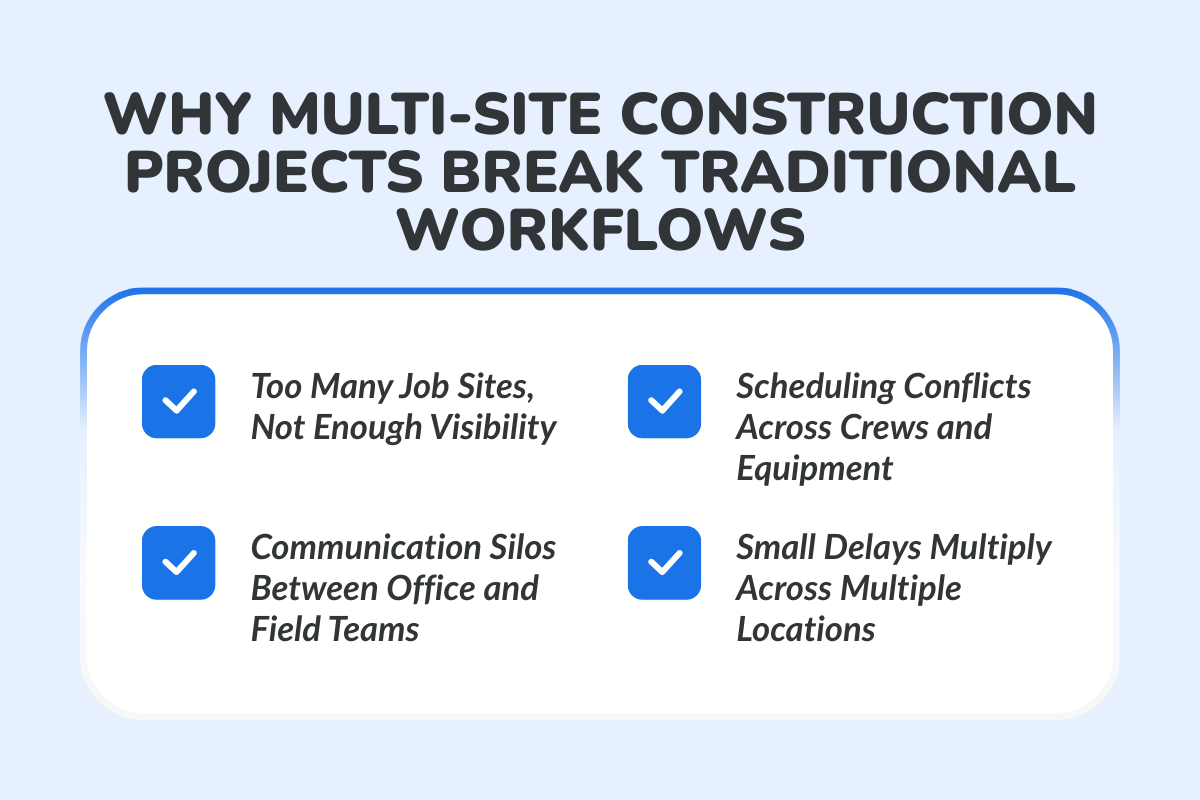
Most traditional workflows were designed for single-site construction. Once you add more locations, those workflows begin to crack.
1. Too Many Job Sites, Not Enough Visibility
When construction sites report progress differently, project managers lose clarity. One site emails daily updates. Another sends photos through messaging apps. A third updates a spreadsheet once a week. There is no single source of truth.
Without real-time visibility, it becomes nearly impossible to accurately track progress. You cannot see which tasks are falling behind or which jobs need attention today. By the time issues surface, they often cost weeks and thousands in rework.
2. Communication Silos Between Office and Field Teams
Field teams are focused on completing the work. Office teams are focused on planning, billing, and client communication. When updates live across texts, emails, and calls, information slips through the cracks.
Essential details get lost, instructions are misunderstood, and safety issues are reported too late. A good construction management software keeps everyone aligned without forcing endless meetings.
3. Scheduling Conflicts Across Crews and Equipment
Managing resources across multiple projects is one of the most complex parts of construction management. Without centralized scheduling, crews get double-booked. Equipment sits idle at one site while another waits.
A shared calendar view in project management software helps you assign tasks, balance workloads, and plan weeks ahead, rather than scrambling day by day.
4. Small Delays Multiply Across Multiple Locations
A delayed inspection at one construction site might seem minor. But when you are managing multiple projects, that delay can ripple across schedules, subcontractors, and budgets elsewhere.
The more sites you run, the more critical it becomes to catch issues early and track progress consistently.
What Multi-Site Construction Teams Actually Need From Software?
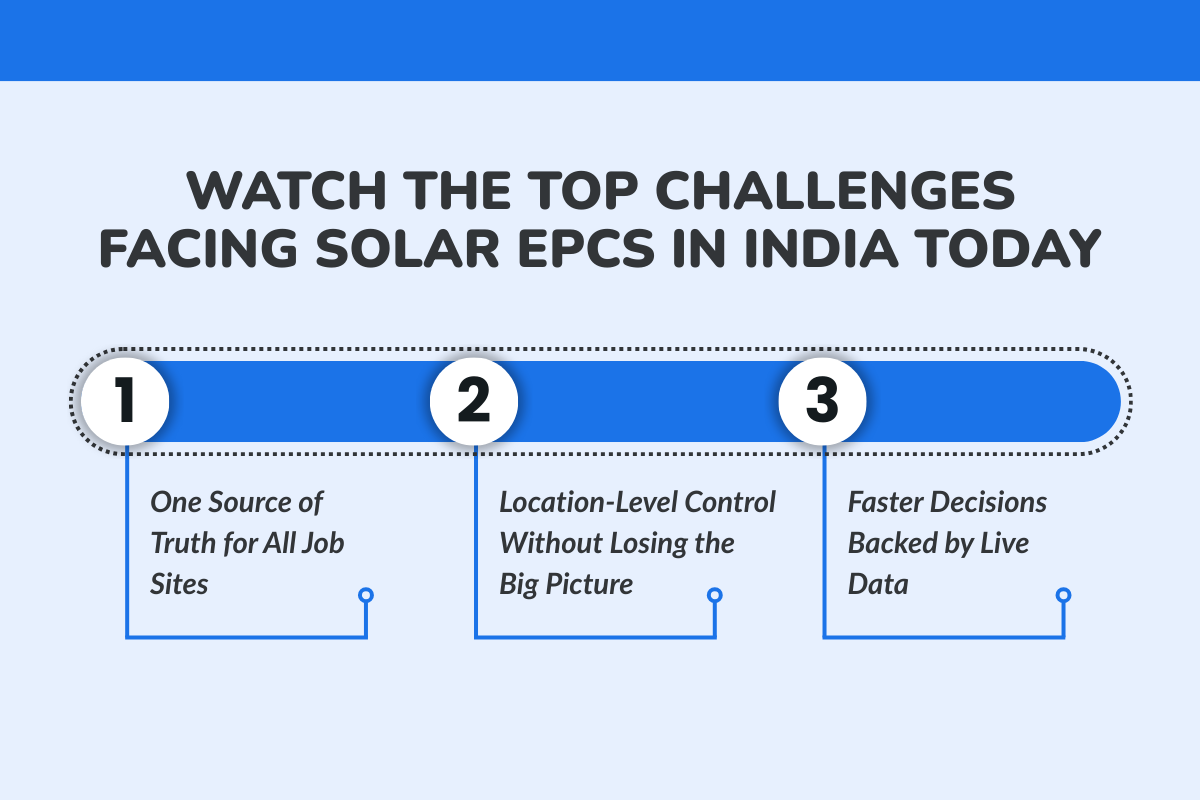
Before talking about features, it helps to reset expectations. The best software is not about flashy tools; it is about clarity.
One Source of Truth for All Job Sites
Multi-site teams need one platform where all project data lives. Tasks, documents, schedules, inspections, and costs should be accessible in one system. This eliminates confusion and keeps everyone working from the same information.
Location-Level Control Without Losing the Big Picture
You need the ability to zoom in on a single construction site without losing sight of your entire portfolio. Good construction project management software lets you manage details at the job level while giving leadership a high-level view across all projects.
Faster Decisions Backed by Live Data
Waiting until the end of the week for reports slows everything down. When teams can access reports and insights in real time, decisions become faster and more confident. This is how growing contractors stay efficient even as projects become more complex.
Construction project management software does more than scheduling. Have a look at this to know more: Why Construction Project Management Software Matters for Cost Control, Not Just Scheduling?
What are the Must-Have Features in Construction Project Management Software for Multi-Site Teams?
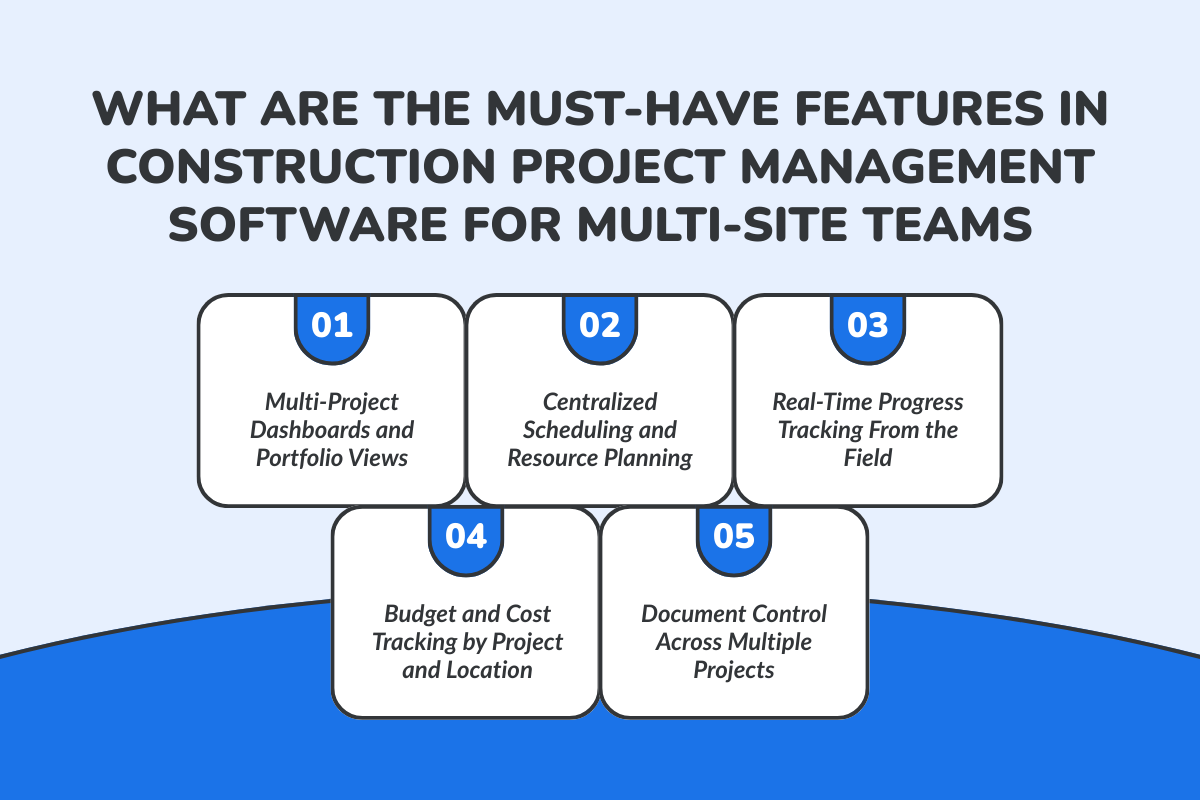
Managing multiple construction sites demands more than basic project tools. The proper construction project management software brings critical features together in one system, giving multi-site teams the visibility, coordination, and control they need to stay on schedule and on budget.
Multi-Project Dashboards and Portfolio Views
Dashboards give you instant visibility across multiple projects. You can compare timelines, budgets, risks, and milestones without opening ten different files. This level of control is essential for managing complex projects at scale.
Centralized Scheduling and Resource Planning
Scheduling should not live in someone’s personal calendar. A centralized schedule helps you assign tasks, coordinate subcontractors, and manage resources across all construction sites. A clear calendar view keeps teams aligned and prevents conflicts.
Real-Time Progress Tracking From the Field
Field teams should be able to capture progress, photos, inspections, and daily logs directly from the construction site. That data flows instantly to the office, keeping everyone informed without extra calls or emails.
Budget and Cost Tracking by Project and Location
Cost management becomes harder with multiple projects. You need to track budgets, change orders, and costs at both the project level and the company level. Strong financial management tools help you spot overruns early and protect margins.
Document Control Across Multiple Projects
Plans, permits, contracts, and files must be easy to find. Document management with secure cloud storage ensures teams always work from the latest version and reduces risk caused by outdated information.
How Top Contractors Use Construction Software to Scale?
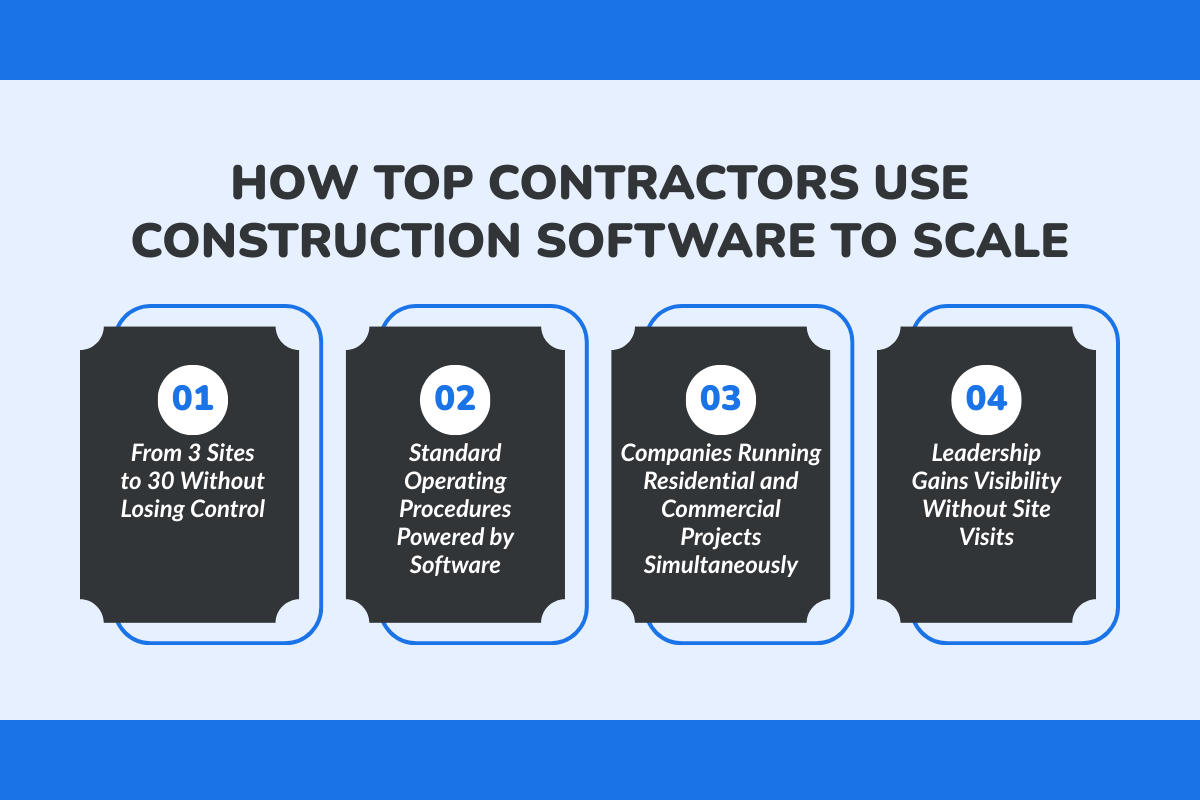
The difference between struggling contractors and successful ones often comes down to systems.
From 3 Sites to 30 Without Losing Control
Contractors who scale successfully replace spreadsheets with construction management software early. Instead of adding more administrative work, they create repeatable processes that support growth.
Standard Operating Procedures Powered by Software
When every site follows the same process, quality improves. Software enforces consistency in task management, inspections, safety reporting, and documentation, no matter how many locations you manage.
Companies Running Residential and Commercial Projects Simultaneously
Managing different project types used to require different tools. Modern project management software allows teams to manage residential and commercial construction projects side by side without workflow conflicts.
Leadership Gains Visibility Without Site Visits
Executives and owners do not need to visit every construction site to stay informed. Real-time dashboards and reports provide insights into progress, risks, and performance from the office.
For a deeper look at cost savings, productivity gains, and risk reduction, explore the real ROI of construction project management software.
Preparing Your Team for Multi-Site Success with the Right Software
Rolling out new construction project management software is not just a technical change. It is a people change.
The difference between software that truly improves multi-site operations and software that gets ignored usually comes down to how well your team is prepared and supported during the transition.
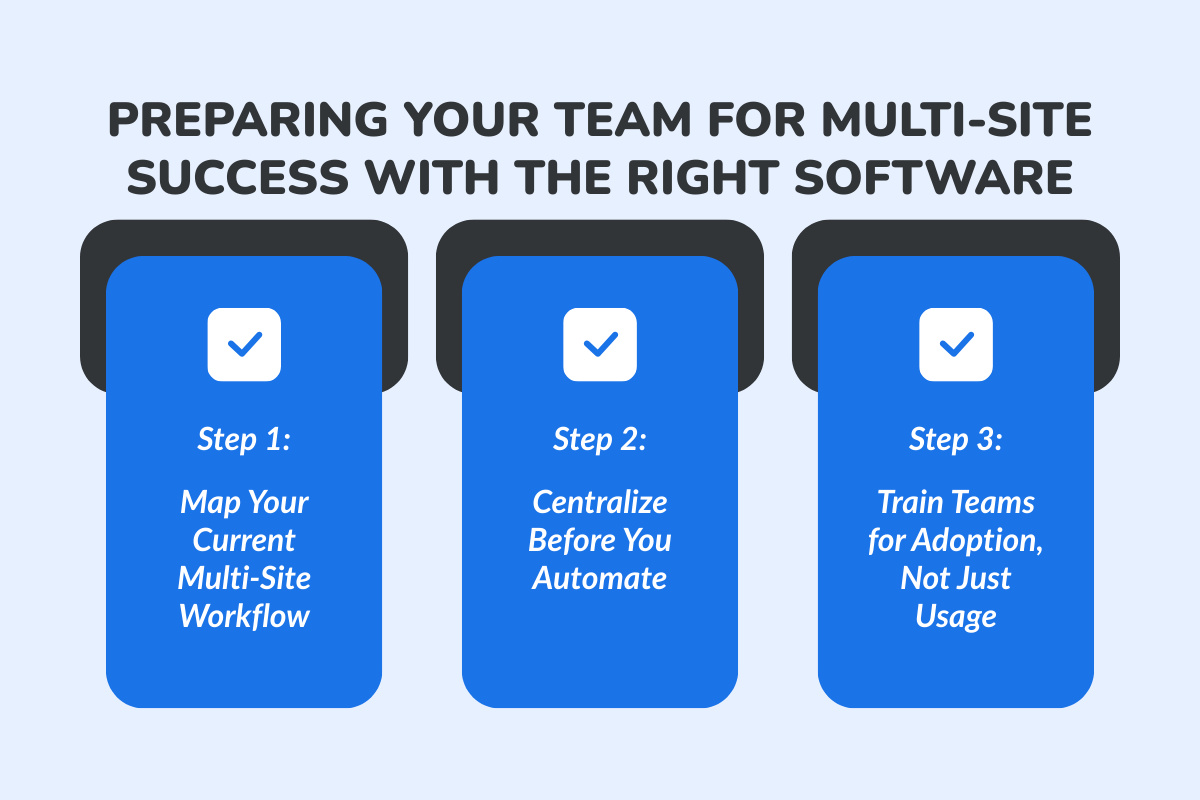
Step 1: Map Your Current Multi-Site Workflow
Start by clearly documenting how jobs move across sites today, from planning and scheduling to on-site updates and closeout. This makes it easier to see where breakdowns happen as projects multiply.
- Identify where communication slows down between the office and construction sites.
- Pinpoint scheduling conflicts, duplicated work, and document handoffs that cause delays.
Step 2: Centralize Before You Automate
Before adding automation, focus on consolidating all project data into a single shared system. Clean, centralized workflows make automation reliable instead of confusing.
- Consolidate schedules, files, reports, and task updates into a single platform.
- Standardize how teams log progress, costs, and change orders across all projects.
Step 3: Train Teams for Adoption, Not Just Usage
Training should mirror real job scenarios, not just walk-through features. When teams see how the system supports their daily work, adoption happens naturally.
- Train field and office teams using real project examples, and they recognize
- Emphasize time saved, fewer follow-ups, and clearer visibility into job progress.
Future Trends in Multi-Site Construction Management
The construction industry continues to evolve as projects grow more complex and teams manage work across multiple locations.
1. Greater reliance on real-time field data
Construction teams increasingly depend on live updates from job sites, including progress logs, photos, inspections, and issue tracking. Real-time visibility helps teams resolve problems faster and reduces delays caused by late reporting.
2. Increased demand for portfolio-level visibility
Leaders want a single view of timelines, budgets, risks, and performance across all projects. Portfolio dashboards make it easier to compare sites, allocate resources intelligently, and forecast outcomes with confidence.
3. Mobile-first tools are becoming the standard on-site
Field teams expect software that works on mobile devices, even in low-connectivity environments. Offline access, quick updates, and automatic syncing are now essential for day-to-day site operations.
4. Shift toward construction-specific platforms
Contractors are moving away from generic project tools in favor of software built specifically for construction workflows. Purpose-built platforms handle change orders, cost tracking, and document control more effectively at scale.
6. AI-powered insights built on clean project data
AI is increasingly used to identify risks, predict delays, and surface cost trends. However, these insights are only valuable when powered by centralized, accurate, and consistently updated project data.
These trends reflect a broader shift toward more connected, data-driven, and scalable construction management for multi-site teams.
Have a look at what is trending and how next-generation Construction software can help you out: Construction Management Software Trends 2026: AI, Mobile, Sustainability & What It Means for You
How ConstructionBase Supports Multi-Site Construction Operations?
ConstructionBase is built for contractors juggling multiple construction sites who want clarity, not chaos. It is designed to simplify operations as you scale, without forcing your team to learn complicated systems or rely on disconnected tools.
Here is how it supports real multi-site operations in practice:
- Centralized project and site management so every job, task, and update lives in one place, no matter how many locations you manage
- Real-time progress tracking with on-site photos, daily logs, inspections, and status updates flowing directly from the field to the office
- Smart scheduling and resource planning that helps you assign crews, subcontractors, and equipment across sites without conflicts
- Built-in budget and cost tracking to monitor expenses, change orders, and profitability at both the project and company levels
- Structured document management with secure cloud storage for plans, permits, contracts, and reports that teams can access anytime.
- Clear dashboards and reports that give leadership instant visibility into progress, risks, and performance without site visits
What makes ConstructionBase especially effective is that it is built around construction workflows, not generic project management. It brings structure to daily operations, improves visibility across all sites, and helps teams stay aligned as projects grow in number and complexity.
For contractors managing multiple projects, ConstructionBase is not just software. It becomes the operational backbone that keeps jobs organized, teams efficient, and decisions grounded in real data.
Bringing It All Together
As projects expand across locations, the cracks in traditional workflows become impossible to ignore. Spreadsheets, emails, and disconnected tools simply aren’t built for the level of coordination, visibility, and speed that multi-site construction now demands.
Construction project management software fills this gap by bringing structure back into daily operations. It gives teams a single source of truth, keeps field and office staff aligned in real time, and helps leaders make informed decisions without waiting for updates or visiting every site.
Instead of reacting to problems after they escalate, teams can spot risks early and stay in control as complexity increases.
For construction companies running or preparing to run multi-site operations, investing in the right project management platform isn’t about technology for its own sake. It’s about building a foundation that allows teams to deliver consistently, protect margins, and grow without chaos.
Ready to Take Control of Every Site as You Scale?
If your business is growing and your tools are holding you back, it may be time to move to a platform designed for multi-site construction success.
Book your demo with ConstructionBase, and you'll see how easy it is to manage construction projects.
FAQs
1. What is construction project management software used for?
It helps construction companies plan, manage, and track projects by centralizing tasks, schedules, documents, and costs.
2. Can construction management software handle multiple projects at once?
Yes, modern platforms are explicitly built to manage multiple projects and provide portfolio-level visibility.
3. Is Microsoft Project enough for multi-site construction?
Microsoft Project can help with scheduling, but it often has a steep learning curve and lacks construction-specific features like field tracking and document control.
4. How does software reduce risk in construction projects?
By providing real-time visibility, consistent processes, and accurate data, teams can identify issues early and reduce costly delays.
5. What should contractors look for in the best software?
Look for a construction-specific platform that brings structure, supports field teams, and scales with your business.
Have questions or need personalized advice?
Talk to an Expert Today and let our construction specialists guide you to success.
Related Posts
Building Construction Project Software: Key Integration Points You’re Missing