
If you’re still relying on spreadsheets for job estimates, you already know how fast things can fall apart. One wrong formula or outdated material price, and your entire bid is off.
With today’s fast-moving construction costs and tighter deadlines, many companies are offering free trials to help contractors find better solutions, as spreadsheets can’t keep up.
That’s why more contractors are switching to construction estimating software. It speeds up the process, keeps pricing accurate, and helps you build consistent, competitive bids without the guesswork.
Smart Construction Estimating Software 2026: Accurate Bids, Real-Time Data, and Higher Profits for Contractors
If you’ve ever spent hours tweaking a spreadsheet to make a bid look right while creating estimates, you know how frustrating traditional estimating can be.
Every row, every formula, every manual update feels like walking on thin ice; one wrong cell and your entire estimate is off.
Here, the problem is that the market has moved faster than the tools many teams still use. Budgets are tighter, bid timelines are shorter, and margins are shrinking, leading companies to seek additional support services.
That’s why predictive construction estimating software is no longer optional; it’s essential. Contractors who embrace real-time cost data, predictive bidding, and digital takeoffs find that these features make it a valuable tool, not just for estimating faster; they’re winning more profitable work with greater accuracy and confidence.
In this blog, we'll explore how the shift from spreadsheets to predictive estimating tools is transforming how construction businesses bid, plan, and profit.
Key Takeaways
- Spreadsheets were never built for modern construction — today’s projects move too fast, and pricing changes too often for manual methods to keep up.
- Predictive estimating software gives contractors a real competitive edge, offering real-time pricing, automated takeoffs, and built-in accuracy checks.
- Data-driven tools help protect profit margins by reducing errors, improving cost forecasts, and showing where past bids succeeded or failed.
- The right features matter: live pricing, collaboration tools, templates, cloud access, and predictive analytics are now essential to building accurate bids quickly.
- ConstructionBase Estimator ties estimating directly into operations, helping contractors turn confident bids into well-executed, profitable projects.
Stop letting spreadsheets decide your margins. Step into the future of estimating with tools that think, adapt, and calculate for you. Book your personalized demo and start bidding with confidence.
Why Traditional Estimating Is Costing Construction Teams Money?
For decades, spreadsheets were the go-to for cost estimating. They were flexible, accessible, and didn’t require an internet connection. But now, they’re holding back growth.
The New Age of Construction Bidding
Today’s construction industry operates on tight timelines and fierce competition. Owners expect detailed proposals within days, complete with accurate estimates, scope breakdowns, and transparent pricing.
At the same time, project costs are more unpredictable than ever. Material price fluctuations, labor shortages, and supply chain delays all eat into margins. Moreover, contractors can no longer afford to rely on static, outdated pricing in old Excel files, especially when remote collaboration is essential.
On the other hand, competitors using modern estimating software with user interfaces that enhance efficiency are submitting faster bids, with richer insights and cleaner documentation. They can generate complete estimates in hours, not days, and their cost projections are data-backed, not guesswork.
The reality is apparent: spreadsheets aren’t built for the speed or complexity of today’s construction management needs but predictive, cloud-based estimating tools are.
Spreadsheets vs. Predictive Estimating Tools- What’s the Better Choice for Modern Contractors?
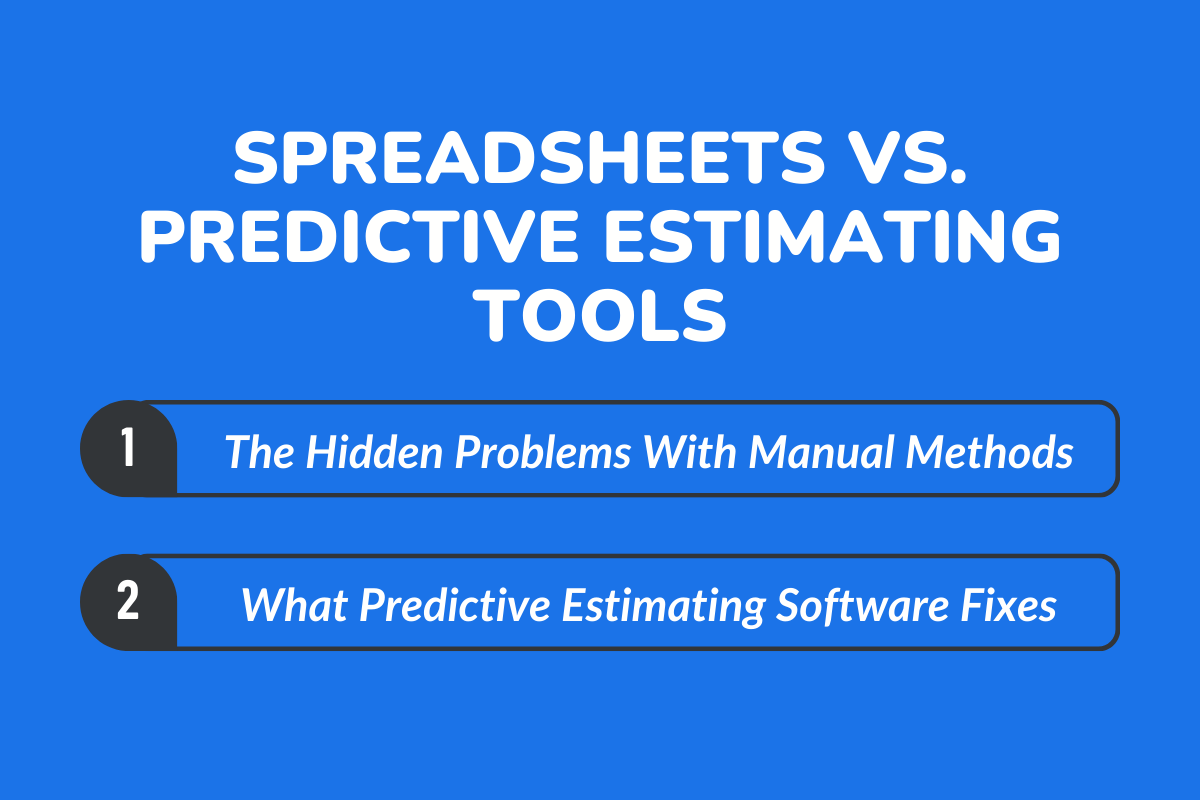
Before you upgrade your estimating process, let's understand why spreadsheets hold you back and how predictive tools give you a real advantage.
Here’s a quick breakdown of what’s really happening behind the scenes:
The Hidden Problems With Manual Methods
If you’ve worked on a construction estimate in Excel, you’ve probably dealt with some of these headaches:
- Copy-paste errors that inflate total project costs
- Outdated material prices pulled from previous bids
- Missing cost elements or line items due to rushed takeoffs
- Version confusion between multiple estimators
- No centralized cost database for future reference
These errors may seem small, but they stack up fast. And with bids often coming down to a single estimate, manual methods can’t keep pace with predictive software.
What Predictive Estimating Software Fixes?
Modern cost-estimating software solves all those pain points. It automates quantity takeoffs, syncs live material prices from supplier catalogs, and runs internal checks for mathematical or scope errors. Teams can work together on the same project, with version control that prevents overlapping edits.
Some estimating tools even suggest labor and markup adjustments based on historical data. This kind of data-driven insight helps contractors maintain competitive pricing while protecting their margins.
The result? Fewer bid errors, faster turnaround, and more profitable jobs.
Building a Strong Digital Estimating Foundation
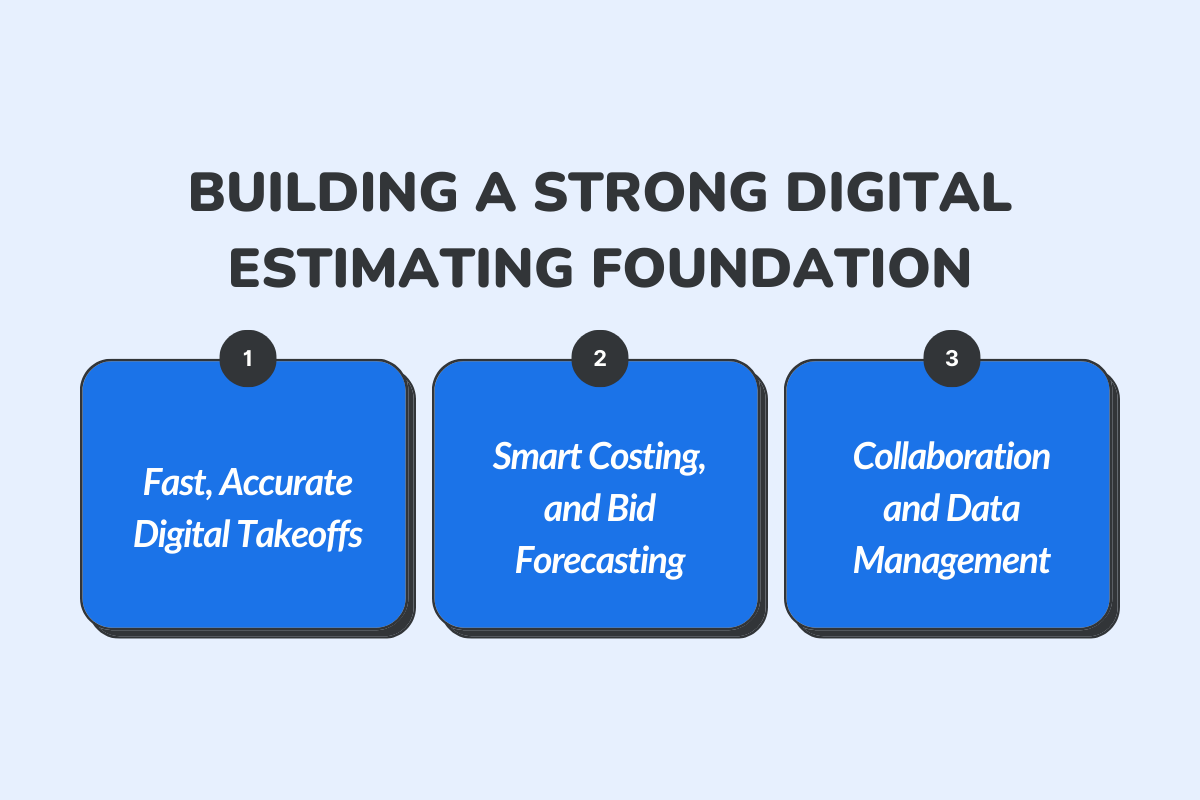
Predictive estimating is about technology and transforming the estimation process into a more intelligent, more reliable system that works for your team and using a comprehensive suite of tools.
1. Fast, Accurate Digital Takeoffs
With modern construction estimating software, you can upload digital plans, trace areas directly on-screen, and extract quantities directly without manual measurements.
Auto-measurement tools can detect materials for roofing, concrete, framing, and MEP systems in seconds. These tools ensure your quantity takeoff is precise and instantly breaks down labor, materials, and overhead costs.
If plans change, version control features keep your takeoff up to date, no more guessing which file is the latest.
2. Smart Costing and Bid Forecasting
Real-time supplier pricing gives estimators an edge. Instead of relying on static cost tables, innovative systems pull live data from suppliers and distributors, allowing you to generate accurate estimations every time.
Predictive tools can run scenario models showing what happens if you lower your markup for a competitive bid or prioritize profit on higher-value projects.
Contractors can forecast how aggressive vs. conservative pricing strategies will affect win rates and profit margins. It’s like having a digital advisor that helps you balance risk and reward for every proposal.
3. Collaboration and Data Management
In a busy construction firm, estimates often move between multiple estimators, project managers, and accountants. Predictive estimating platforms make collaboration seamless.
All your estimates, templates, and cost libraries live in a centralized cloud workspace. You can assign permissions allowing junior estimators to draft bids while senior staff review final numbers.
Additionally, integrated collaboration tools keep communication clear, with comment threads, shared folders, and a complete audit trail of every change. This eliminates confusion and improves accountability across teams.
Explore powerful construction estimation software. Read: Construction Estimation Software: Get Accurate Bids in Minutes.
How Well-Structured Bids Give Contractors a Competitive Edge?

> Bid Packaging and Presentation
Clients want clear, professional proposals. Predictive tools let you create branded bid packages with precise estimates, polished breakdowns, and transparent cost structures.
You can include clarifications, handle RFIs, and attach scope notes all within the same system. This level of professionalism builds trust and helps general contractors win more construction projects.
> Profit Protection for Contractors
Profit protection is one of the most significant benefits of predictive estimating. Built-in analytics flag missing or duplicated items and alerts you before you submit the bid.
Features such as automatic markup optimization, margin tracking, and risk scoring give contractors visibility into the profitability of each bid, which is crucial before generating the final invoice.
It’s a proactive approach, not a reactive scramble after the project is underway.
Paid Tools and Integrations That Improve Bid Win Rates
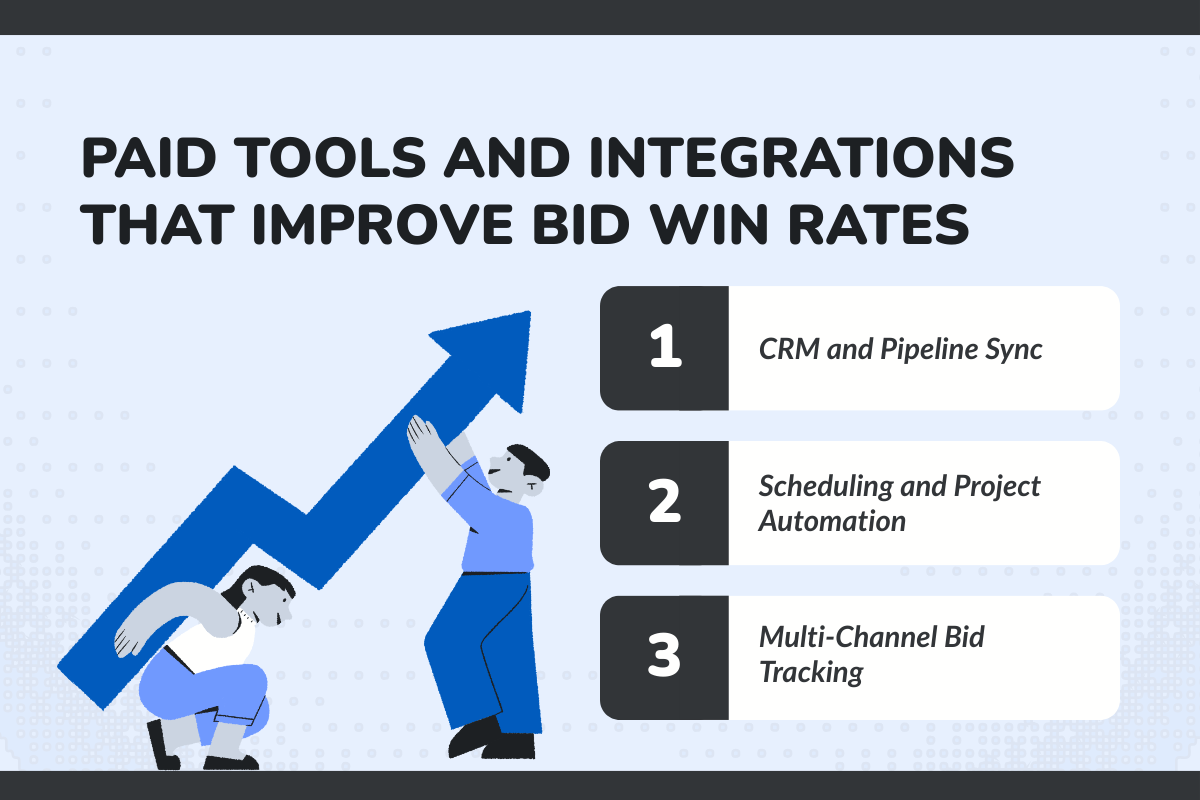
Modern software solutions are not isolated systems they’re built to connect your entire business workflow, from estimating to project completion.
1. CRM and Pipeline Sync
Seamless customer relationship management integration means your sales pipeline connects directly to your estimating software.
You can automatically convert qualified leads into bids, send follow-up reminders for open proposals, and seamlessly integrate with accounting software to forecast revenue across upcoming projects.
It bridges the gap between sales and operations, something spreadsheets can’t do.
2. Scheduling and Project Automation
Once a client accepts your proposal, the best construction estimating software automatically turns it into a live project.
Work orders are created, budgets are tracked, and crew schedules are updated in real time. Job costing and project management tools track actual vs. estimated costs as the job progresses, ensuring tighter control over profit margins.
3. Multi-Channel Bid Tracking
With so many opportunities posted on bid boards like PlanHub, Dodge, and iSqFt, predictive tools now make it easier to manage multiple bids.
You can auto-import project documents, organize takeoffs into folders with one click, and set alerts for deadlines or competitor activity. This streamlined bid management process helps construction businesses pursue more opportunities without burning out their teams.
Data-Driven Estimating and Analytics
The shift toward data-driven estimating is one of the most powerful changes in the construction management world. Predictive tools don’t just store data; they help you learn from it.
Estimate Performance Metrics
| Metric | Purpose | Example |
|---|---|---|
| Win Rate | Measures how often your bids convert | Identify which estimate templates or bid styles consistently close more deals |
| Cost Accuracy | Reduces cost variance | Compare estimated costs vs. actual job costs to uncover gaps |
| Margin Forecasting | Helps protect profit margins | Spot items, phases, or trades where margins tend to erode |
| Historical Project Benchmarking | Builds smarter future bids | Track performance trends by project type, size, or client |
Using Data to Improve Future Bids
Predictive systems analyze your past performance to help you improve future bids. They identify which projects delivered strong margins, where you underbid, and which types of jobs consistently drive profit.
Over time, this sharpens your cost analysis and makes your estimates more realistic. Moreover, seasonal trends, material inflation, and labor productivity rates are factored in automatically, giving you more accurate estimates every time.
Which Industries Are Benefiting Most From Predictive Estimating?
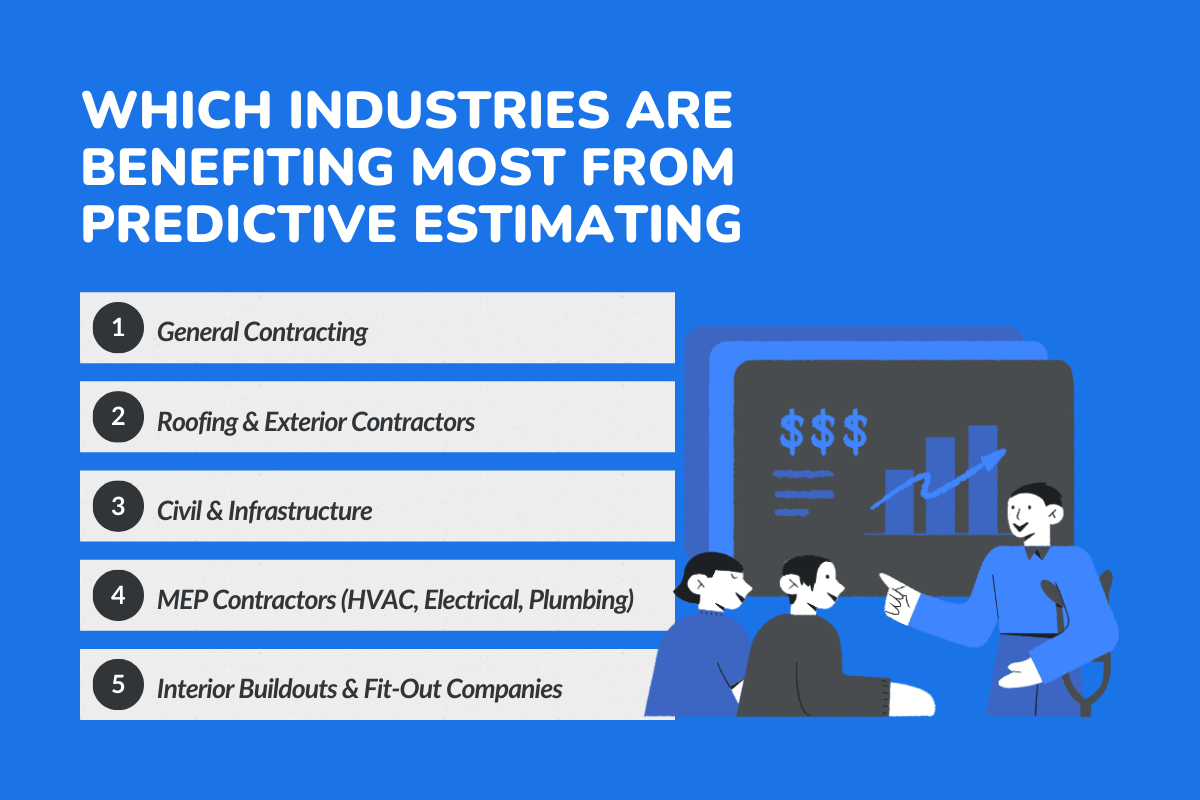
The benefits of predictive estimating aren’t limited to large GCs. Every trade is seeing results.
> General Contracting
General contractors use predictive tools to manage multiple projects simultaneously, generate detailed estimates, and track indirect costs with ease. These platforms help GCs stay organized and streamline processes when juggling overlapping timelines and complex scopes.
- It also reduces the risk of human error, especially when pricing multi-phase builds.
- GCs gain clearer visibility into profit margins before a project even starts.
> Roofing & Exterior Contractors
Roofing firms now leverage digital plans and supplier integrations to create accurate estimating models that link directly to project management workflows.
Predictive tools help contractors adjust for pitch, waste factors, and changing material prices in real time, offering many helpful features.
- This leads to more competitive bids without sacrificing margins.
- Roofers also get faster takeoffs, which is huge during busy seasons.
> Civil & Infrastructure
Large-scale contractors rely on predictive forecasting to manage material volatility and complex projects with hundreds of variables. These tools help model scenarios, compare supplier options, and plan multi-year budgets with far more certainty.
- It’s especially valuable when dealing with fluctuating costs for steel, concrete, and fuel.
- Civil teams gain better control over contingencies and long-term resource planning.
> MEP Contractors (HVAC, Electrical, Plumbing)
MEP teams benefit from precise quantity takeoffs and real-time labor calculators to achieve accurate estimates. Predictive platforms adjust automatically for project complexity, equipment types, and regional labor costs.
- This cuts down the time needed to build multi-system estimates.
- It also ensures bids reflect actual labor requirements, not guesswork.
> Interior Buildouts & Fit-Out Companies
These firms use cost databases and custom assemblies to create fast, repeatable templates for recurring work. Predictive estimating helps them price renovations, corporate fit-outs, and retail buildouts with consistent accuracy.
- It also speeds up approvals since clients get clear, itemized breakdowns.
- The repeatability factor is huge for companies doing multiple similar jobs across properties.
Not sure if now is the right time to upgrade your estimating process? These 5 Signs Your Construction Company Needs Estimating Software will help you decide.
Future Trends Shaping Construction Estimating
Looking ahead, construction estimating software will become even more intelligent and connected. Here’s what’s on the horizon:
1. AI Copilots That Auto-Write Detailed Estimates: Next-gen estimating platforms will use AI copilots to instantly generate accurate, line-by-line estimates based on past projects, blueprints, and cost data, turning hours of manual work into minutes.
2. 3D and AR Takeoffs Using Tablets and Mobile Devices: Contractors will soon walk job sites with tablets or smart glasses, performing real-time 3D and augmented-reality takeoffs to visualize structures, measure dimensions, and validate plans on the spot.
3. Predictive Bidding Tools That Calculate Win Probability in Real Time: Advanced analytics will assess market conditions, historical bid data, and competitor behavior to predict which bids are most likely to win, helping teams focus on the most profitable opportunities.
4. Live Supplier Collaboration for Instant Material Pricing: Estimating tools will connect directly with suppliers, and some may offer a free version enabling real-time material cost updates, availability checks, and instant quote approvals to keep bids accurate and competitive.
5. Sustainability Scoring for Environmentally Conscious Clients: Future estimators will include sustainability scores, helping contractors choose eco-friendly materials, reduce waste, and meet green-building standards that appeal to modern clients.
These innovations will make estimating faster, more transparent, and far more profitable.
For a deeper look at how estimating technology is evolving, read the Future Trends in Construction Estimating Software Development.
ConstructionBase Estimator: The Backend Engine Behind More Profitable Bids

This is paragraph text. Click it or hit the Manage Text button to change the font, color, size, format, and more. To set up site-wide paragraph and title styles, go to Site Theme.
1. What is construction estimating software?
It’s a digital tool that helps contractors create accurate bids faster. It automates takeoffs, updates material prices in real time, and reduces manual errors compared to spreadsheets.
2. Why switch from spreadsheets to predictive estimating tools?
Spreadsheets are slow and error-prone. Predictive estimating software uses real-time data and forecasting to deliver faster, more accurate, and profitable bids.
3. How does ConstructionBase Estimator improve bid accuracy?
It combines live supplier pricing, automated takeoffs, and data analytics to help contractors build precise, profitable bids with less manual work.
4. Is ConstructionBase Estimator suitable for small contractors?
Yes. It’s designed for contractors of all sizes, offering a straightforward interface, cloud collaboration, and innovative tools to save time and win more bids.
Have questions or need personalized advice?
Talk to an Expert Today and let our construction specialists guide you to success.
Related Posts
Building Construction Project Software: Key Integration Points You’re Missing