
The bidding process is a long and cumbersome part of the preconstruction phase.
- You spend hours creating bid estimates and submit more than 10 in a month, yet win only 2.
- You keep losing bids because competitors already have more attractive proposals that have been approved by clients.
Every contractor has been through these and understands the feeling that brings exhaustion and disappointment.
But the quoted total cost is not the culprit; the real issue lies in your bidding process, which ultimately makes the difference between winning and losing bids.
Construction bidding software is the real lever for effective bid management. It detects bid requests, generates real-time estimates, and creates instantly polished, visually impressive proposals with e-signature integration for faster approvals.
Construction Bidding Software Solutions to Streamline Workflows and Boost Conversion Rate
Winning more bids with favorable profit margins requires both speed and accuracy in the highly competitive construction industry.
To keep up with this growing market and tackle labor shortages, adopting the right digital tools is key to staying competitive.
Construction bidding software acts as the perfect digital assistant, automating tasks like tracking bid invitations, estimating costs, and managing documents, reducing manual errors and improving efficiency.
In this blog, you’ll understand why most subcontractors lose bids due to process gaps, not pricing, and how to fix it with a structured, high-performing workflow.
Quick Takeaways
- Winning bid invitations in the construction industry requires targeting the right opportunities and maintaining accurate and reliable estimates that build client trust.
- Subcontractor bids must focus on the relevant projects and present standout proposals, supported by proactive follow-ups to strengthen customer confidence.
- The lowest bid does not always win projects, but the smart, well-prepared bids delivered with speed and precision are what truly make the difference.
- Choosing the right construction bidding software is essential to increase bidding speed and increase conversion rates.
The Win Rate Math That Most Subs Have Never Actually Run
Have you ever wondered what bidding software really delivers compared to a manual process?
Let us walk through a simple example to reveal the hidden cost of manual bidding:
Assume you spend 10 hours per bid at a cost of $50/hour, which equals to $500 per bid. If you submit 50 bids annually, your total estimating cost becomes: 50 × $500 = $25,000 per year
Now consider your win rate of 22%, which means you lose 78% of your bids.
So the actual cost spent on lost bids is: $25,000 × 78% = $19,500 wasted annually
What This Actually Means
- A large portion of your estimating effort is going into bids that never convert
- This cost is usually invisible but directly impacts profitability
- For most subcontractors, this number falls between $18,000–$26,000 annually
This is the point where win rate stops being just a metric and starts becoming a diagnostic tool.
What makes the Bidding Management Software superior, proving its ROI?

- Higher Win Rates Through Smart Targeting: Bidding software identifies high-potential opportunities, helping you focus on the right projects and avoid wasting time on low-value bids.
- Real-Time Accuracy in Estimates: Automated cost calculations based on live data deliver precise quotes faster than competitors, increasing client engagement and reducing wasted bids.
- Increased Bid Value in Less Time and Cost: Automated bid tracking, document handling, and proposal generation cut effort in half compared to manual processes, while replacing per-bid costs with a predictable subscription pricing plan.
A three-tier win-rate framework can be your next step toward more consistent and profitable wins.
| Win Rate | What It Usually Signals | What the Data Suggests |
|---|---|---|
| Under 15% | Bidding for the wrong jobs, no qualification filter | Too many GC lists, weak relationships |
| 15% – 28% | Average performance | Inconsistent proposals, reactive follow-ups |
| 28% – 45% | Above market | Structured process, repeat GC work |
| Above 45% | Highly selective bidding | Strong relationships, focused opportunities |
What Are The 4 Places Subcontractors Actually Lose Bids?
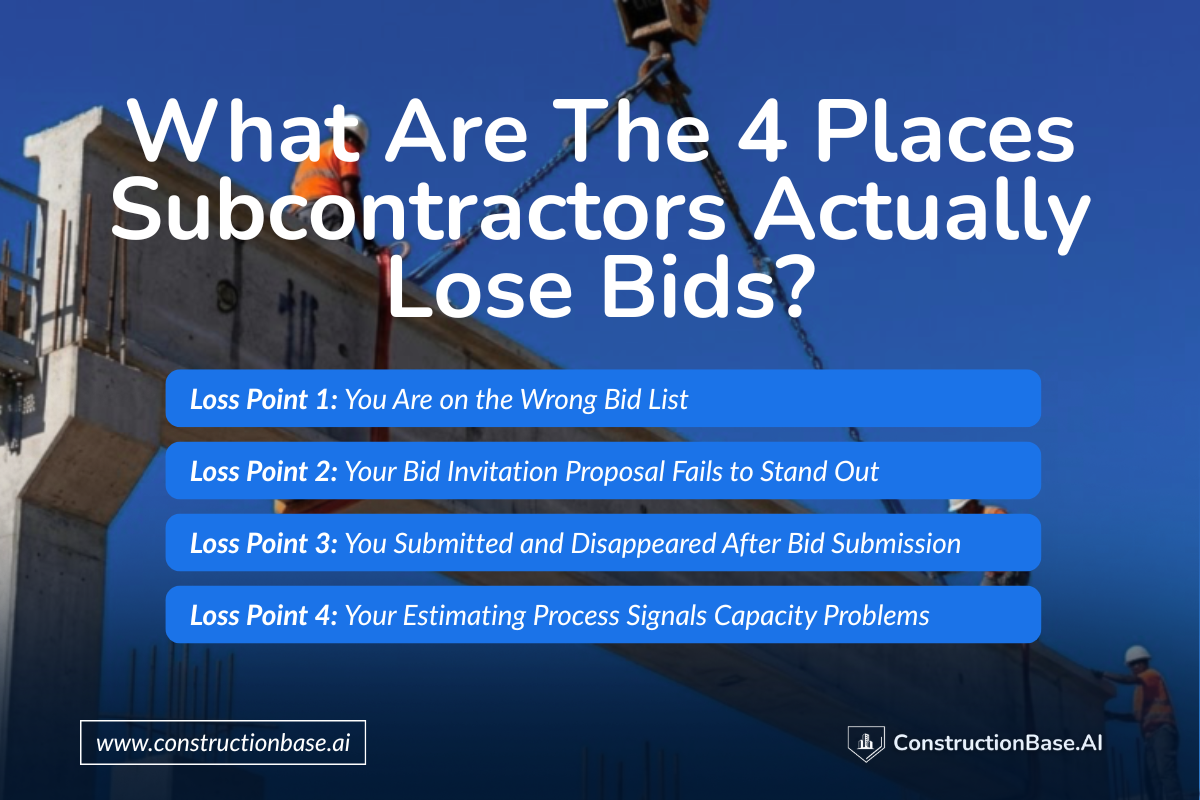
Let us talk about the four common pitfalls that can make you crash and lose those bids and revenue prospects:
Loss Point 1: You Are on the Wrong Bid List
Bidding on the right projects is important to accomplish your bid win rate. Chasing the wrong bids, such as those outside your geographical area, beyond your company’s capacity, or misaligned with your expertise and available resources, often becomes the primary reason for failure.
Loss Point 2: Your Bid Invitation Proposal Fails to Stand Out
If your bid details and proposals look the same as those of other subcontractors, they create no real value.
Failing to showcase your company’s uniqueness through visually impressive proposals or strategic solutions pushes you into pure price competition, which is a tough battle to win in a crowded field.
Loss Point 3: You Submitted and Disappeared After Bid Submission
Submitting the bids and waiting passively for approval is a blunder in the age of proactive responses, where the moment you let go of your prospects, communicative competitors will snatch them.
A strategic follow-up process for every prospective client, without pushy sales, is necessary to boost your win rate.
Loss Point 4: Your Estimating Process Signals Capacity Problems
When your estimates are too high, too low, or have major scope gaps, it creates skepticism about your operational capacity, building distrust.
Inconsistency and delayed estimates also signal doubts about your ability to execute a project that contributes to the loss of bids. Winning construction bids is not just about numbers but implementing the right strategy with precision.
What a High-Performance Subcontractor Bid Workflow Actually Looks Like in 2026?
High-performing subcontractors are operating on structured, repeatable workflows that eliminate guesswork, reduce delays, and improve consistency across every bid they submit.
So the real question isn’t whether you need a better process, it’s what that process actually looks like in practice.
Here’s a breakdown of how a modern, high-performance bidding workflow is built today:
Step 1: Qualify the Bid Before You Build It (The Filter Most Subcontractors Skip)
The contractors who actually grow are the ones who do not directly plunge into takeoff for every bid invitation. Not every bid deserves effort, time, and money if it has zero chance of delivering a return.
Build a “Hit List” and not a “Hope List” for your bids. Ask yourself these simple questions as the deciding factors:
- Do I have an existing relationship with this General Contractor?
- Is this project within my core expertise?
- Is the timeline realistic, and can my team actually meet it?
- What’s my real probability of winning this bid?
All these answers can be derived from solid bidding software with a centralized lead and client database to assess which bids are worth pursuing and which ones should be held back based on past history and market trends from an organized and searchable portal. You never grow by increasing bidding; you grow by bidding for the right opportunities.
Step 2: Run Your Digital Takeoff Efficiently
Digital takeoff is about shifting from a manual, guesswork-driven process to a structured, data-driven workflow. By working directly from digital plans, contractors can rely on real-time, accurate inputs, which ultimately lead to faster estimates, fewer errors, and more competitive bids.
However, the accuracy of your takeoff doesn’t begin when you start measuring; it begins much earlier, with the quality of the data you’re working with.
Accuracy Starts Before the Takeoff
Before any takeoff begins, it’s critical to ensure that your inputs are reliable and consistent. Even the most advanced tools cannot compensate for outdated drawings, missing details, or misaligned data.
In practice, this means that the foundation of every accurate estimate lies in how well your initial information is managed.
This is where a simple principle applies:
Better inputs → Better estimates → Better bids → Protected profits
Best practices to follow:
- Use digital takeoff tools powered by satellite imagery, drone captures, and uploaded site data
- Ensure every team member has the latest version control
- Use color-coded layers for clarity in project details
The best construction bidding software brings all of this together, helping you standardize inputs, reduce manual errors, and run faster, more reliable takeoffs every time.
Step 3: Build the Estimate Using Assembly-Based Pricing
Assembly Cost Estimates are critical for better budget control during project execution in construction software. It involves a detailed cost breakdown of project components, including labor, equipment, and material costs.
Rather than relying on a total lump-sum cost, this level of detailed analysis is far more effective for planning and resource allocation.
A small adjustment in design or a single component can immediately update the total cost, directly impacting the overall budget. Even a design error causes 38% of all construction cost overruns.
Fix the workflow aligned to this pricing structure:
- Import quantities from digital plan takeoffs
- Use current supplier pricing lists
- Add a potential cost reserve to account for project uncertainties
Why does it really matter?
Statistically, only 31% of projects stay within budget, while large-scale projects often exceed their budgets by up to 80%.
Step 4: Format Your Proposal from Contractors' Perception (The Positioning Step)
Proposals are meant to resolve pain points and justify pricing; they are sales documents, not just price lists. If a price list were enough, a contractor could simply use any online calculator to generate estimated quotes.
A General Contractor may be reviewing more than 10 bid documents at a time, so you need to stand out with clarity, professionalism, and a strong visual presentation.
Guidelines to Create Powerful Proposals:
- Create bid packages that have project details with a complete scope definition
- Transparent pricing breakdown with defined payment terms
- Project timelines with measurable milestones
- Change order policies to manage modifications in project scope and documents
- Digital e-signatures for faster approvals
- Contact information for easy access to your support team
An automated digital takeoff software can multiply your win rate by delivering a customizable template that delivers polished and professional proposals to help you stand out. A well-structured proposal can bring 2x more conversions.
Step 5: Track, Follow Up, and Measure Your Bid Management
A structured pipeline allows you to track:
- Bids submitted
- Bids under review
- Bids approved
- Bids lost or pending
Keeping this visibility ensures better control, faster follow-ups, and improved decision-making across your bidding process.
Smart follow-ups showcase professionalism and dedication, and you can achieve this with an automated follow-up tool tailored to your workflow, because persistence pays off.
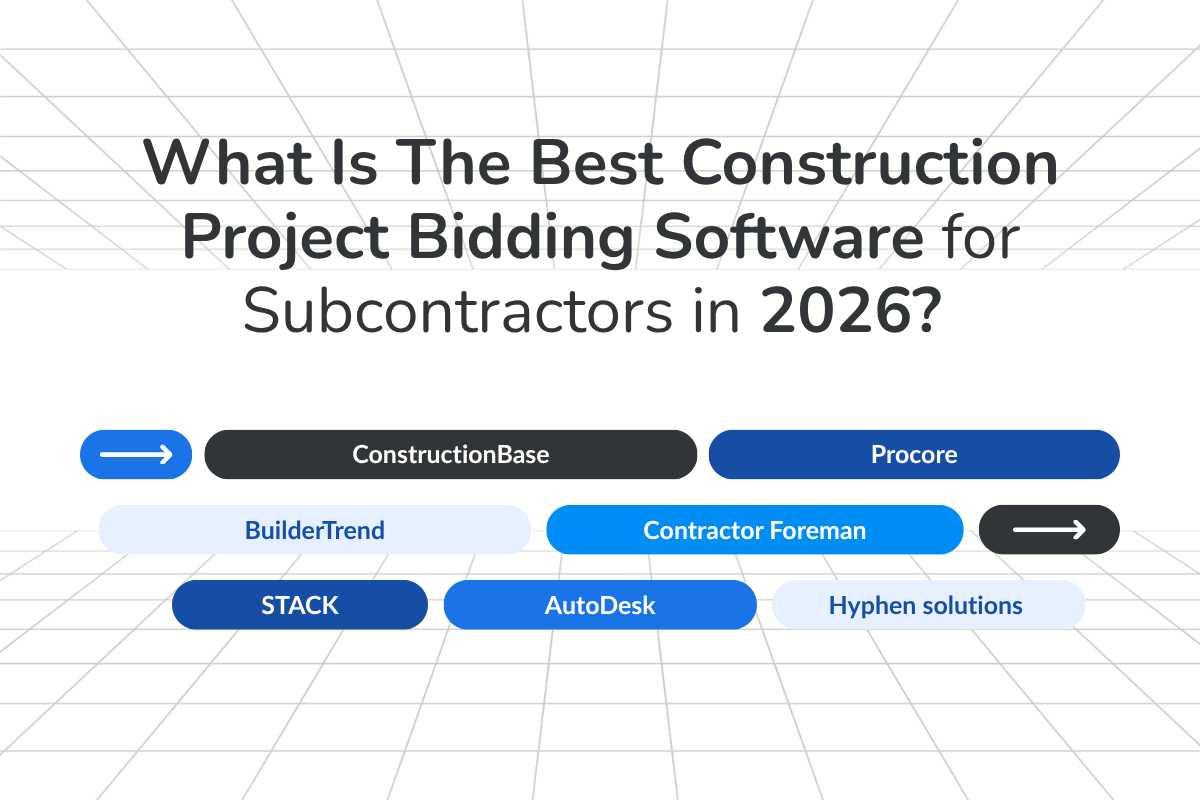
What is the best construction project bidding software for Subcontractors in 2026?
The construction industry in the U.S. stands at a flourishing stage, growing at a CAGR at 4.4% to 5.5% from 2025 to 2030.
This indicates that construction bidding software is not just a tool; it is your growth engine to deliver more error-free bids, handle higher project volumes, and win more deals with profitable margin gains.
You ought to have the right one in place to make all the difference in the growing industry. Let us take a quick look at the top 7 best construction bidding software:
1. ConstructionBase
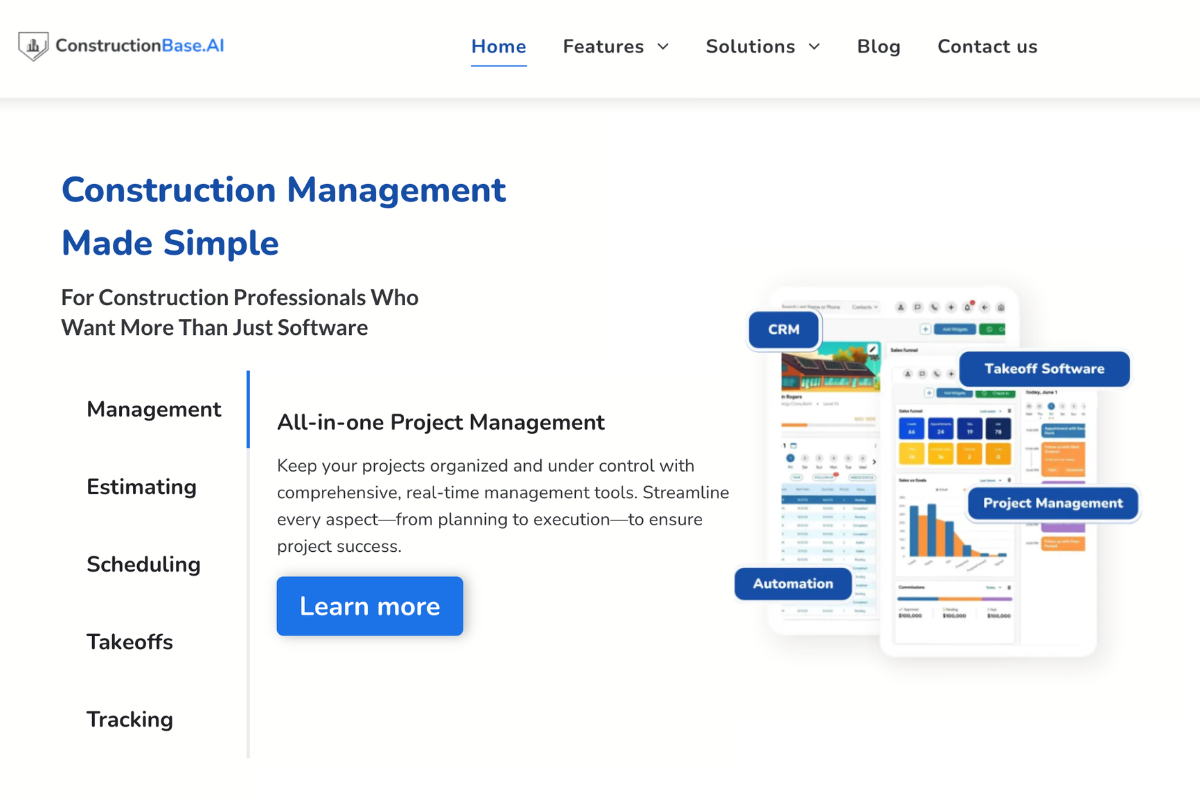
About: It is an all-in-one construction software designed to streamline estimates, takeoffs, and proposals. It automates project management by streamlining workflow from bid to completion.
Preferred By: Small to medium-sized general contractors in the construction industry looking for a single dashboard solution with powerful features to automate project management, bidding, and sales, and quick adoption of automation without extensive training.
Standout Features:
- Automated Bid Management: Generates competitive bid proposals within minutes using pre-built templates, increasing speed to compete better and accelerate win rates.
- Live Pricing for Accurate Estimates: Access real-time material, equipment, and labor costs to keep bids competitive, accurate, and maintain profitable margins within every bidding proposal.
- Real-Time Collaboration Tools: A centralized platform to share documents, notes, photos, and updates that keeps field teams and office staff in sync for the latest version control on project progress.
- Customizable Workflows with API Integration: Adapts the bidding workflow to your business needs and scales effortlessly with API integrations without major technical overhauls, providing a highly intuitive interface for users.
- White-Label Branded Proposals: Create client-ready and personalized, visually impressive proposals with custom branding and pre-filled templates delivered faster and more professionally.
- AI-Driven Bid Validation: Leverage AI to detect errors, validate bid data, and ensure every proposal is accurate and compliant before submission.
- Bid Tracking & RFI Management: Tracks bid invitations, monitors subcontractor engagement, and manages RFIs with automated responses, ensuring every opportunity is utilized.
- Reporting & Analytics Dashboards: Uses real-time dashboards to evaluate bidding performance, identify bottlenecks, and make data-driven decisions for better outcomes.
Pricing Plan: ConstructionBase does not publicly disclose its pricing. It offers customized quotes based on your company size and specific workflow requirements.
2. Procore
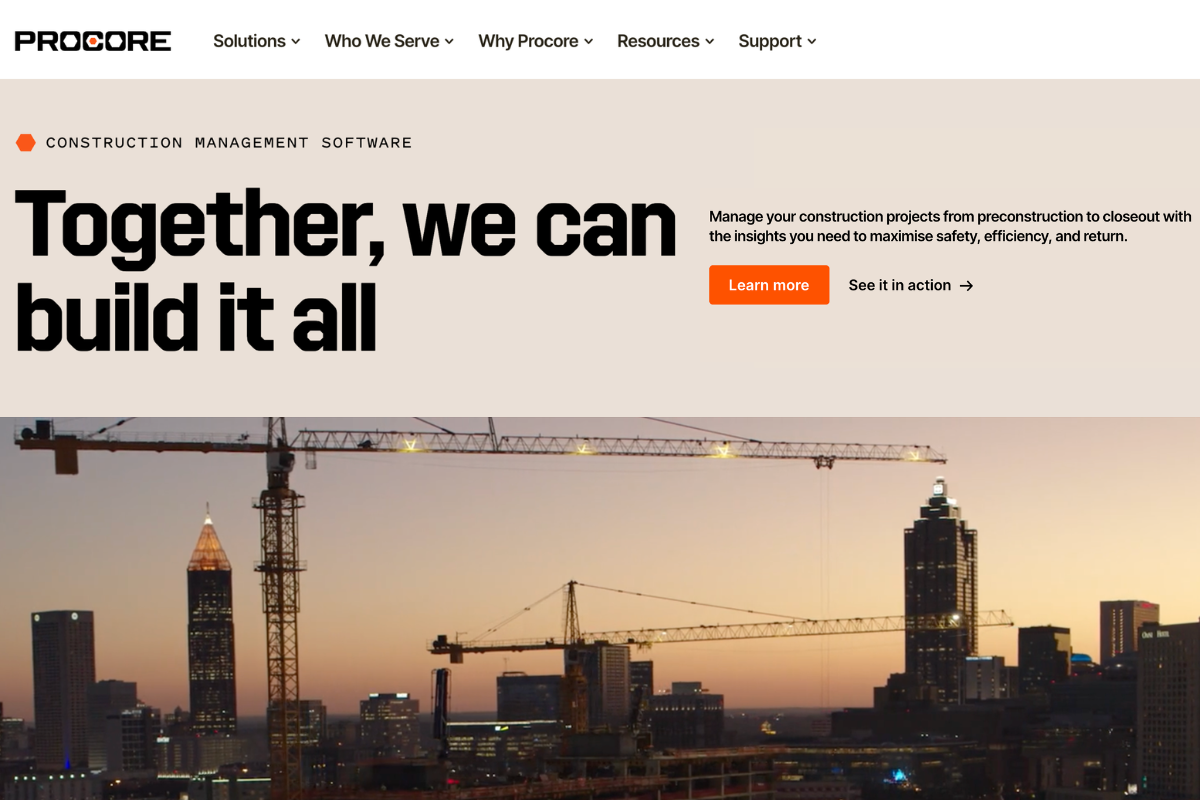
About: Procore is an enterprise-grade construction management software designed for larger contractors handling complex projects at multiple locations by providing centralized control for RFI, budgeting, scheduling, bidding process, and financial management.
Preferred By: Large firms managing high volumes of projects, looking for automation-driven software to oversee the entire construction lifecycle with real-time collaboration and centralized control.
Standout Features:
- Real-Time Project Management: Connects field and office teams on a single platform to collaborate, track progress, and resolve issues instantly.
- Live Scheduling: Keep projects on track with real-time scheduling, task assignments, and seamless collaboration between field and office teams.
- RFI & Submittal Management: Ensure the right materials and products are approved and used by streamlining RFIs and submittals throughout the bidding and construction process.
- Reporting & Analytics: Gain actionable insights with live dashboards to track performance metrics and optimize project outcomes.
- Centralized Document Storage: Simplifies communication, compliance, and approvals with secured and centralized access to all project documents for all team members.
Pricing Plan: Contact the Support Team for customized pricing based on your needs.
3. Buildertrend
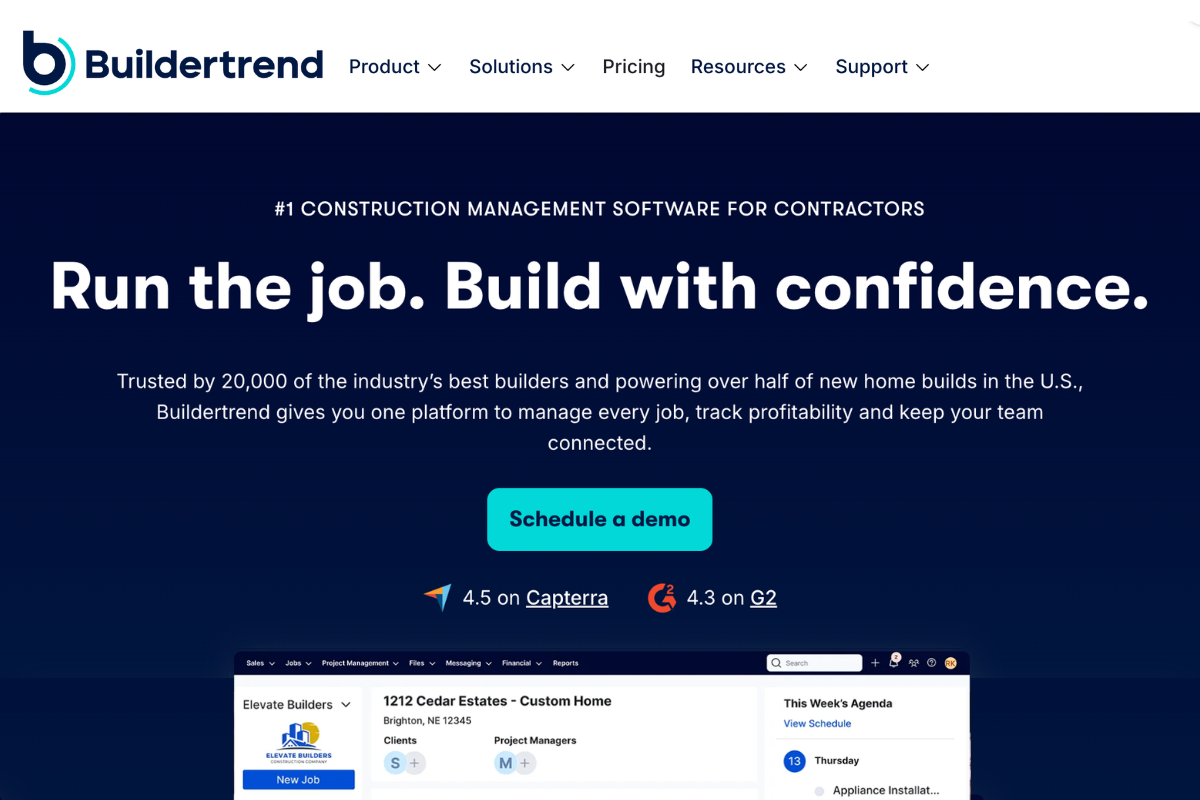
About: A construction project management software built for home builders, remodelers, and contractors to streamline processes by enabling faster, more accurate estimates and helping them win profitable projects.
Preferred By: Residential builders and contractors who require digital takeoffs and collaboration among clients, teams, and vendors.
Standout Features:
- Real-time updates: Crews can log issues, upload photos, videos, and notes, along with marking tasks as progress is made, ensuring everything is updated in real time.
- Client Portal Communication: Clients can view daily logs, submit change order requests, and receive notifications on project progress for proactive visibility at all times on a user-friendly interface app.
- Financial Analysis: Management of budgets, change orders, purchase orders, invoice tracking, and online payment portals by integrating with third-party tools like QuickBooks.
- Centralized Repository: Storage of all essential documents like blueprints, contracts, site photos, and more, saving time in accessing important files and preventing data loss.
- Mobile App Access: Accessible mobile app to view and update job progress, with offline functionality that syncs once internet connection resumes.
- Scheduling Feature: Drag-and-drop functionality with interactive Gantt charts to showcase timelines, keeping teams and clients engaged with real-time updates and instant notifications.
- Analytical Dashboards: Detailed reports revealing change orders, budget analysis, sales, and operational performance to identify variances and take strategic actions to improve results.
Pricing Plan: It has subscription plans starting at $900 per month (billed annually). You can customize the feature set and number of users based on your needs. (Source)
4. Contractor Foreman
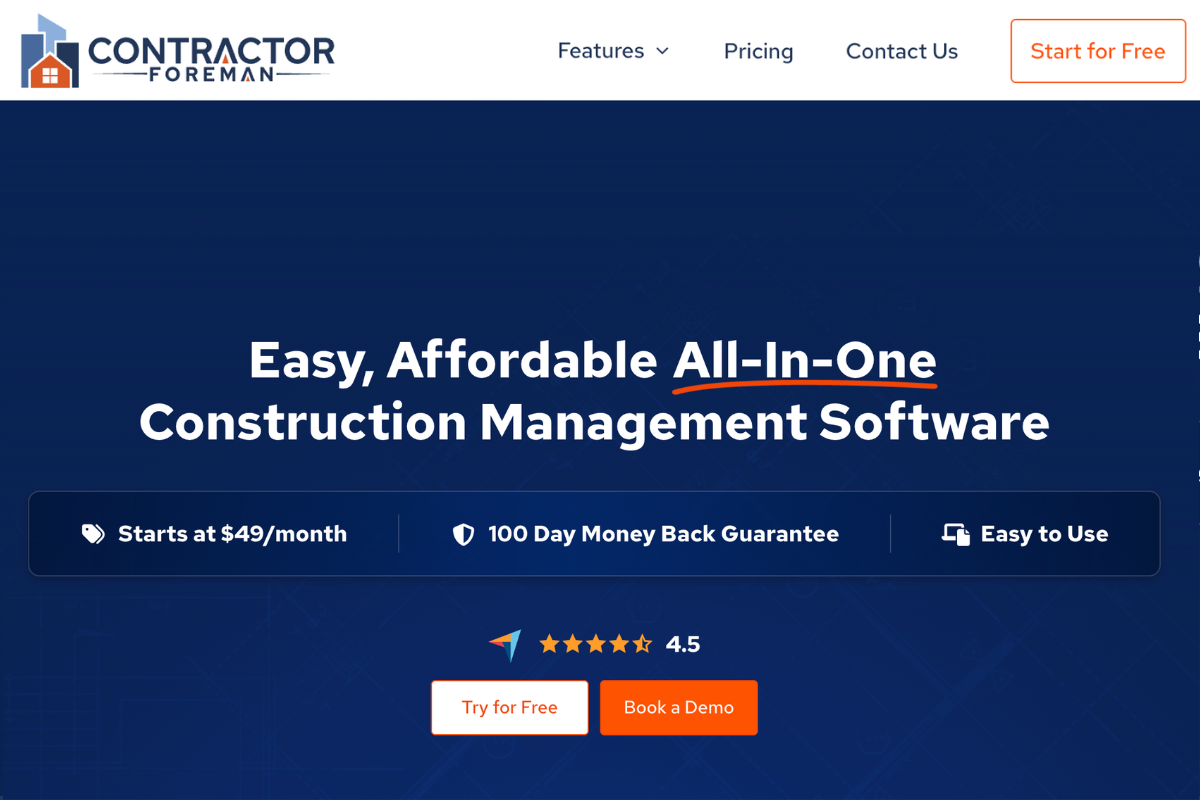
About: A cloud-based construction management software designed by construction industry experts to streamline project execution with optimized scheduling, efficient financial analysis, and collaborative team management.
Preferred By: Small and medium-sized residential and commercial contractors looking for a comprehensive project management tool.
Standout Features:
- Streamlines project management with a live scheduling dashboard showcasing Gantt charts and daily logs that can be reassigned to handle tasks and identify critical paths to avoid delays.
- Document control tools with centralized storage of all essential documents, such as blueprints, proposals, and signed contracts.
- Simplified people management with GPS-powered timecards, real-time team communication, customizable private messaging, and a client portal to send proposals with e-signature collection.
- Detailed estimates using customizable pre-made templates, with the ability to manage bids alongside live vendor pricing lists to prepare profit-driven proposals and purchase orders for subcontractors.
- Monitors job, material, and equipment costs, allowing visual comparison of budgets, expenses, and profit areas to support strategic decision-making.
- Supports standard billing with AIA-style G702 invoices and facilitates instant payment processing using ACH and credit cards.
- Integrates with third-party tools like QuickBooks for data syncing, Gusto for payroll management, and scheduling tools like Google Calendar and Outlook 365.
Pricing Plan: The Subscription costs breakdown is as follows, charged monthly:
- Basic: $49/month, 1 user
- Standard: $79/month, Up to 3 users
- Plus: $125/month, Up to 8 users
- Pro: $221/month, Up to 15 users
- Unlimited: $332/month, Unlimited users
5. STACK
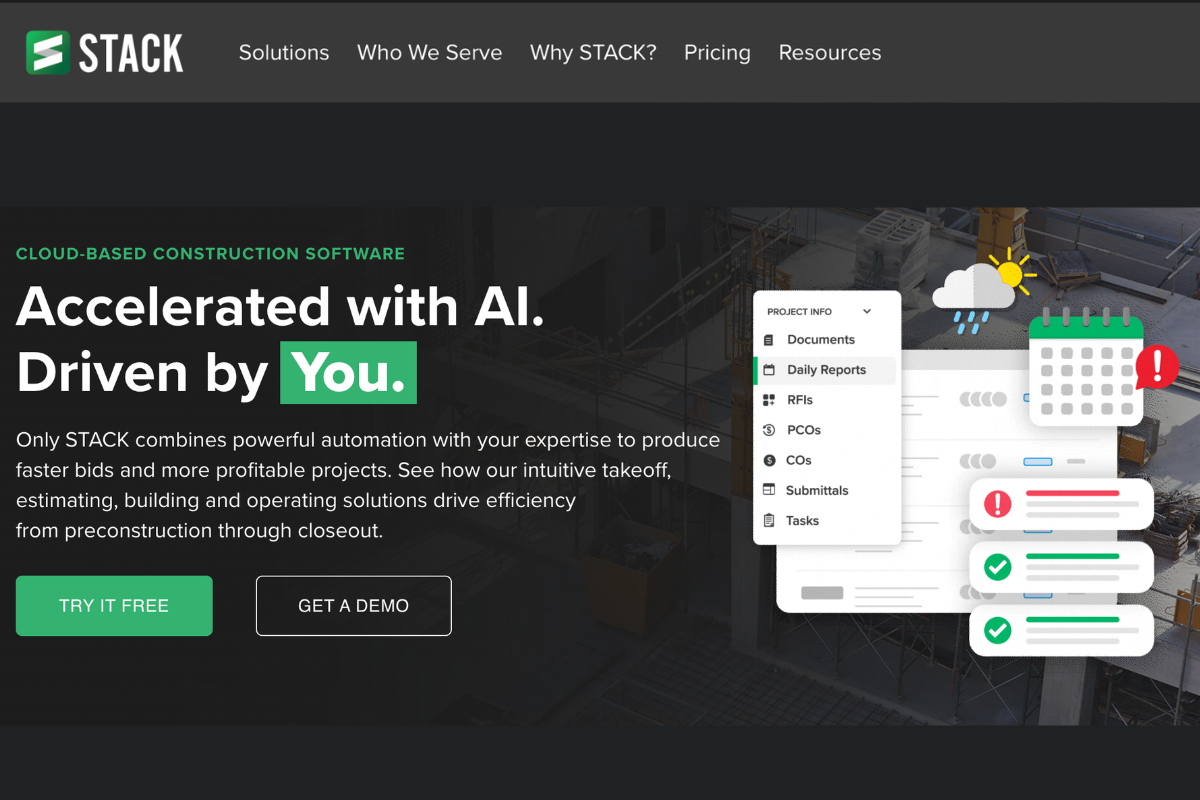
About: A cloud-based construction takeoff and estimating software designed to help contractors perform accurate digital takeoffs and create faster and data-driven cost estimates.
Preferred By: Specialty contractors in the construction industry to manage bidding and projects by reducing errors to increase efficiency and profit margin.
Standout Features:
- Automated Calculations: Converts measurements into material quantities and estimated costs to improve accuracy and speed.
- Mobile Access: Enables team members to access, update, and share plans from anywhere, supporting efficient collaboration.
- Pre-built Templates: Helps create bid proposals quickly while maintaining consistency and professionalism across projects.
- Seamless Integrations: Syncs with accounting and construction tools for a streamlined preconstruction workflow.
- Reporting & Analytics: Provides insights into estimates, costs, and project data to support informed decision-making.
- Centralized Workspace: Stores plans, drawings, and takeoff documents in one place for easy access and organization.
Pricing Plan: The customized subscription can be tailored to specific workflow needs. The basic annual plans offered are summarized below:
Take off & Estimate
- Premium plan: $249/per user/ per month,
- Pro Plan: $249/per user/ per month
Build & Operate
- Essential: $599/per user/ per year
- Pro: $699/per user/per year
Custom (Build Your Own): Custom pricing. It offers tailored features and a flexible user structure
6. Autodesk
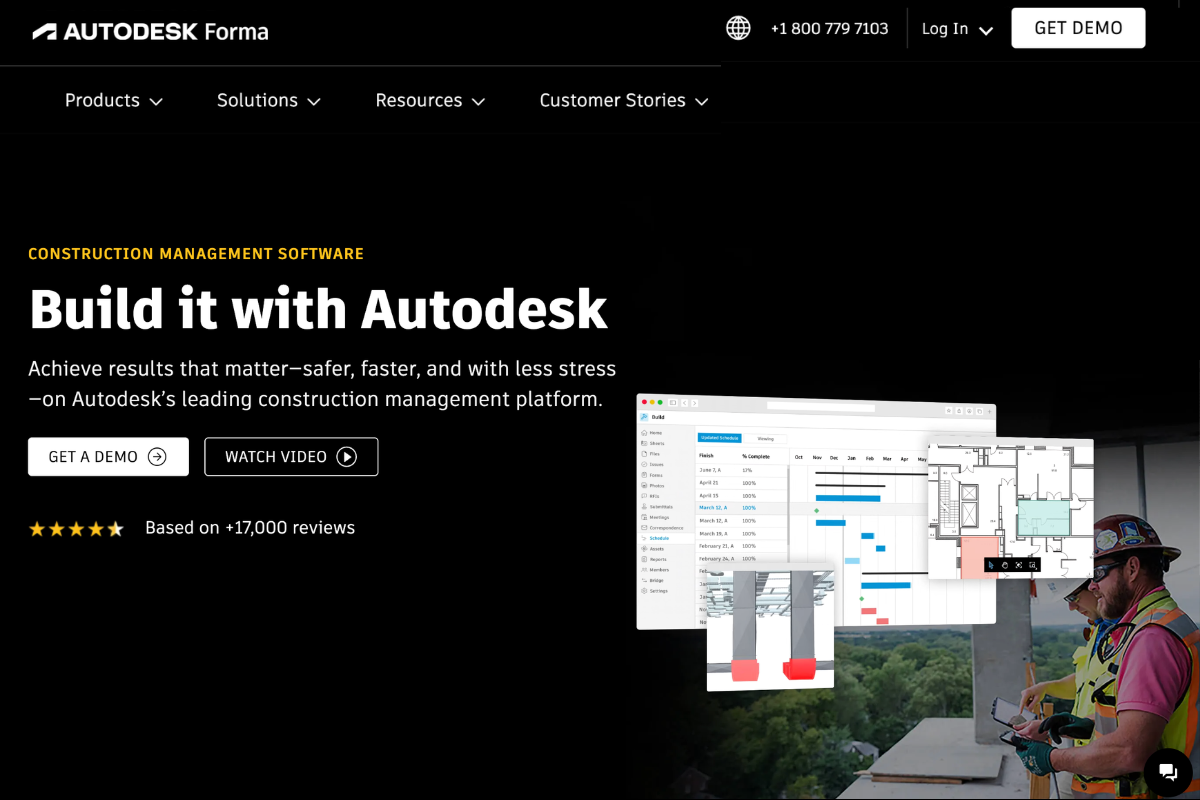
About: It is a cloud-based construction software suite to connect workflows and teams for smooth operational management, connecting design, preconstruction process, and construction workflows.
Preferred By: Large firms and construction professionals dealing with complex projects who need to streamline the construction process
Standout Features:
- 2D & 3D Digital Takeoff: Combines 2D and 3D takeoff tools to enable faster quantity takeoffs and seamless conversion of quantities into cost estimates for bid preparation.
- Automated Cost Calculations: Uses a cost database and integrated cost workflows for the calculation of material, equipment, and labor costs with improved accuracy.
- Centralized Data Storage: Stores all project data and documents in one place, accessible to team members remotely for greater flexibility.
- Version Control & Dynamic Updates: Automatically updates project documents and estimates, reducing rework and minimizing delays.
- Real-time Collaboration: Allows multiple team members to communicate and work simultaneously to improve coordination.
- Professional Proposal Generation: Creates detailed, client-ready proposals with export options in multiple formats.
Pricing Plan: For customized subscription plans and pricing, you need to contact the sales team for assistance based on your needs and business size.
7. Hyphen Solutions
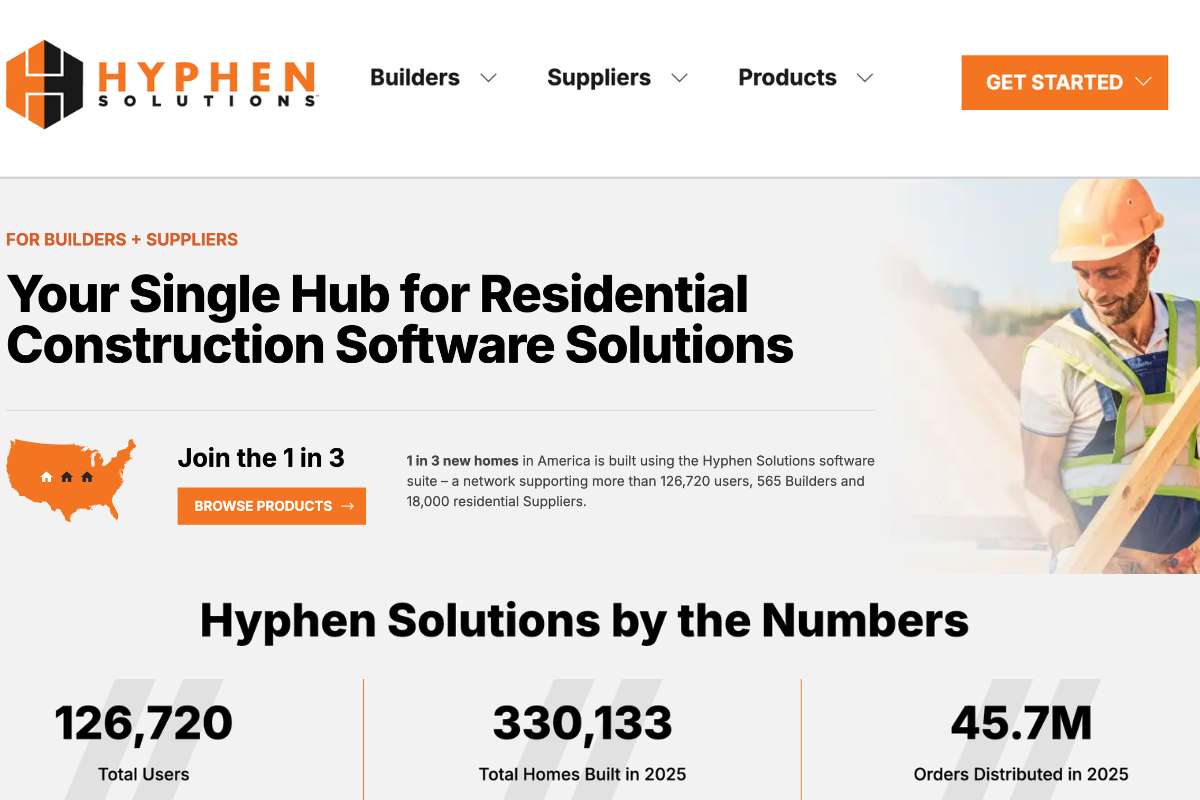
About: A construction management software for home builders, suppliers, and manufacturers to streamline scheduling, supply chain management, and communication among all stakeholders.
Preferred By: Residential builders, construction suppliers, and professionals are looking to streamline scheduling and stakeholder communication.
Standout Features:
- Integrated Site Management Tools: Includes daily reporting and workflow tracking to support efficient site operations.
- Cost Tracking & Budget Visibility: Enables tracking of project costs, budgets, and financial performance for better control and decision-making.
- Centralized Document Management: A single source for storing essential documents with secure access and robust version control, reducing delays and confusion.
- Real-time Communication: Collaborative tools to keep all stakeholders aligned and minimize miscommunication.
- Scheduling Management: Allows builders to create, adjust, and manage construction schedules with real-time updates shared with suppliers and subcontractors.
- Project Visibility & Reporting: Provides insights into project progress and operational performance, with the ability to export reports for managers to support strategic decisions.
Pricing Plan: Customized quote-based pricing based on business size, number of users, and selected module features.
How to Implement Bidding Software For Subcontractors Without Disrupting Your Active Bids?
Most general contractors struggling with manual bidding processes are hesitant to shift to software. They often believe the transition phase will add more stress and risk losing active bids.
It’s time to shift gears from the common skepticism that most contractors exclaim, "I’m too busy to switch to a new system right now," to "I have the right plan to adopt new software while still winning my current bids."
Let us uncover the 4-week adoption plan that smart teams adapt to make a smooth transition:
Week 1: Assess & Align:
Identify the key bottlenecks in your current bidding process, such as manual estimating errors, lengthy bid creation, and missed opportunities due to competition.
Week 2: Start Small (Pilot Phase):
There is no need to switch everything at once. Begin with a pilot phase by running the software for new bids while continuing with the existing process for ongoing bids. This reduces the risk of failure and gives the team time to adapt to the new system through hands-on experience.
Week 3: Train & Optimize:
Conduct focused training sessions for all stakeholders involved in the bidding process. Address resistance, resolve queries, and ensure every team member uses the new system effectively and confidently.
Week 4: Scale with Confidence:
Integrate your bidding software with project data and other third-party tools to create a seamless workflow. Track performance consistently and monitor improvements in bid success rates.
Decision Matrix: Which Software is Right for You as a Construction CRM?
Whether you are still making a selection or have already made the choice! Let us have a closer look at your pain points and the resolution that would best fit to meet your business strategic goals:
| Current Challenge | Goal | Best-Fit Software |
|---|---|---|
| Scattered documents, time wasted managing files | Centralize documents and automate bidding workflows | ConstructionBase, Buildertrend, Procore |
| Low response rate after bidding | Improve targeting and follow-ups to increase conversions | ConstructionBase, Contractor Foreman |
| Inaccurate material pricing is affecting margins | Use real-time supplier pricing for accurate estimates | STACK, Hyphen, Buildertrend, ConstructionBase |
| Limited to desktop, no mobility | Enable bidding and project access from anywhere | BuilderTrend, Procore, ConstructionBase |
| Competing only on price with basic proposals | Shift to value-based bidding with professional proposals | ConstructionBase, Procore, Buildertrend |
| Facing all of the above issues | End-to-end workflow automation and scalability | ConstructionBase |
The Bottom Line: Your Bidding Process Holds Your Brand Value
Bidding is the starting point of your construction project. Win the bid, and you open the door to revenue; if you lose it, you have hit a setback.
You need to prepare bids that help you win clients through a smarter and more strategic approach. Construction bidding software can act as the engine that helps you win more bids by improving efficiency, ensuring every proposal reflects your brand, and showcasing your true value.
It is not the lowest-priced bid that wins, but the most trustworthy one.
Get in touch with our experts for a quick demo of ConstructionBase and see how it can support bidding, estimating, and branded proposals, making you the obvious choice every time.
Frequently Asked Questions (FAQs)
What is the best construction bidding platform?
There isn’t a single “best” platform; it depends on your scale and workflow. Large contractors often use tools like Procore or BuildingConnected for enterprise-level bidding and subcontractor networks. Smaller teams prefer simpler, cost-effective tools that combine bidding with CRM and scheduling. Platforms like Pestbase (though built for pest control) show how integrated systems, combining leads, estimates, and job tracking, can simplify bidding workflows for service-based businesses.
How Do Construction Professionals and Subcontractors Discover and Secure Bid Opportunities?
Construction subcontractors can discover bid opportunities using collaboration platforms like PlanHub and Dodge Construction Central, where they can search for projects filtered by region and scope.
Additionally, many general contractors join industry groups such as the Associated General Contractors, which provide access to valuable networks and private bidding opportunities.
How to bid for a construction project?
Bidding involves reviewing project documents, estimating costs (materials, labor, overhead), and submitting a competitive proposal. The key is accuracy and clarity; underbidding leads to losses, and overbidding loses the job. Modern workflows use digital tools to streamline takeoffs, pricing, and proposal submission. The process is similar across industries, just as platforms like Pestbase help service businesses standardize estimates and pricing, construction software helps contractors systemize bidding for consistency and speed.
What is the Difference Between Estimation Software and Bidding Software?
Construction estimating software helps calculate material and labor costs, enabling accurate digital takeoffs for budget planning. In contrast, construction bidding software streamlines the entire bid submission process from creating proposals to submitting and tracking bids.
How can a Subcontractor improve their Bid Win Rate?
Subcontractors can actually improve their bid win rate by using digital takeoff tools to keep estimates accurate and avoid costly errors. In addition to this, it is important to follow up on every bid submission to keep the construction company at the top of mind and help boost the conversion rate.
What is the most popular construction software?
Popularity depends on category, but Procore is widely considered the industry leader due to its all-in-one capabilities, project management, financials, and bidding. Other widely used tools include Autodesk Construction Cloud and Buildertrend. The trend is shifting toward integrated platforms that connect operations, similar to how tools like Pestbase unify workflows in service industries.
How Long Does it Take to See a Win Rate Improvement After Implementing Bidding Software?
Construction bidding software can deliver a positive ROI within the first quarter of implementation. Automating and streamlining the creation, management, and submission of competitive project bids, it improves win rates. It also enables teams to handle a higher volume of projects, enhancing customer satisfaction, which drives more referrals, which ultimately creates new opportunities for business growth.
Have questions or need personalized advice?
Talk to an Expert Today and let our construction specialists guide you to success.
Related Posts
Building Construction Project Software: Key Integration Points You’re Missing